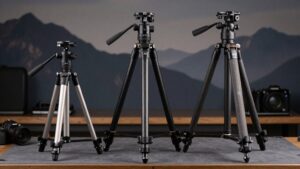
Twist Lock vs Flip Lock Tripod Legs: Which Leg Lock Is Faster and Tougher?
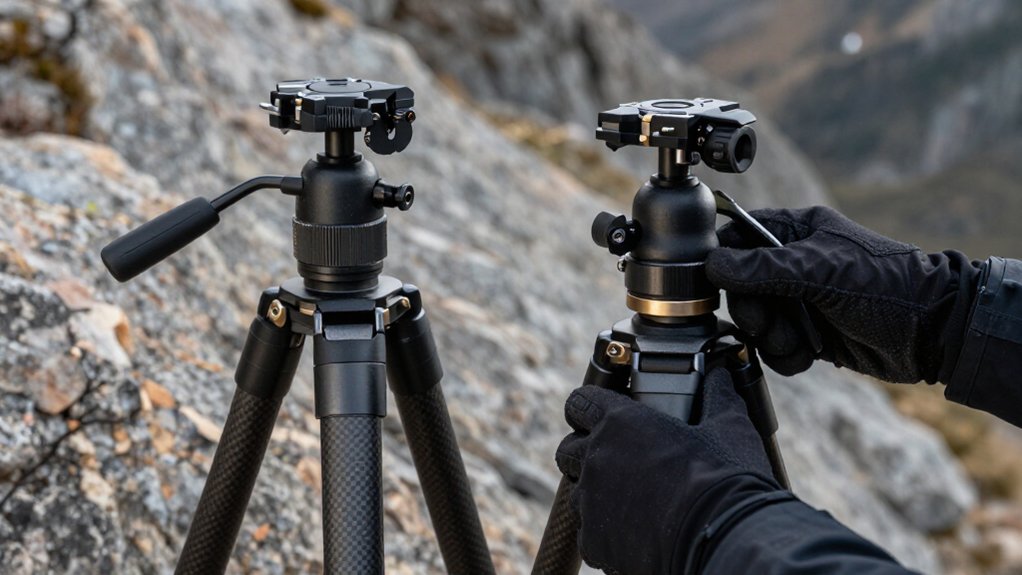
Flip locks usually deploy faster because you can flick each lever, while twist locks can loosen several sections with coordinated quarter-turns.
For toughness, twist locks generally resist exposed grit and vibration-related creep better, but performance depends on fit, tolerances, and clean interfaces.
In cold or muddy conditions, either system can stiffen or close incompletely, so check engagement and tug each leg before loading your tripod.
Your setup determines the trade-off; details show where each excels.
Sand-and-Grit Resistance
Sand and grit expose a key difference between tripod lock types: debris can jam a lever lock’s external cam or pivot, reducing clamp force and letting a leg creep under vibration. On dusty ground, you may see lever closure stop short; a partial flip can look secure yet fail under vibration. Use the snap and a tactile tug to confirm engagement.
Twist locks suffer fewer grit-related problems during travel between beaches, trails, and your bag because their locking interface stays less exposed. Still, collapse legs and wipe them before retraction carries sand onward.
| Condition | Lever lock | Twist lock |
|---|---|---|
| Loose grit | Cam may jam | Usually resists entry |
| Fine sand | Clamp may weaken | Threads can bind |
| Field response | Check snap; tug | Retract, wipe legs |
Internal Collars, External Cams
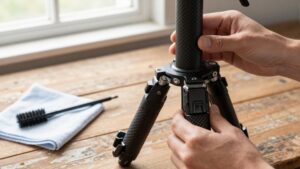
Although both lock types secure telescoping leg sections, they apply pressure differently: a twist lock tightens an internal threaded sleeve or collet, often with a C-ring, while a flip lock presses through a visible external cam. That difference changes what you see and how you operate each system.
With a twist lock, you turn the leg collar to compress the inner interface; its low-profile design leaves no external cam to inspect. A flip lock uses a hinged lever, so you can confirm its locked or released position at a glance.
The lever’s snap can feel faster on one leg, while coordinated hand movements may let you loosen or tighten several twist collars quickly. Neither design is inherently tougher: reliability depends on the leg joint, including the twist lock’s seal or gasket and the lever lock’s cam and pivot tolerance for contamination. Compare construction and fit, not labels alone, when choosing for your intended loads and expected maintenance conditions before buying.
Cold-Weather Lock Performance
In cold weather, flip locks often work more easily with gloves because their larger levers provide more leverage than small twist collars. That advantage doesn’t eliminate cold-related problems: exposed pivots or cams can stiffen when frozen grit or moisture reaches them. Before mounting your camera, check that each lever has fully closed.
Twist locks may turn more slowly because contracting metal tightens fine threads, while ice or debris can add resistance. With either design, give each locked leg a firm downward tug and check any visual indicator; this catches incomplete engagement before loading the tripod. In snow or freezing rain, keep the tripod covered during setup outdoors. Avoid over-tightening twist collars, which can stress internal seals, and keep ice from packing lever pivots.
One-Handed Leg Deployment
For one-handed leg deployment, twist locks can release multiple sections with a firm quarter-turn, while flip locks open and close with a quick flick.
Once you’ve learned their repeatable feel, collars let you release several sections during pack-down without resetting your grip. For extension, twists can feel faster because you lock each section as you rotate the leg.
Levers demand accurate finger placement on every cam, and limited thumb leverage can slow you down. In gloves or cold conditions, external levers often remain easier to flick, while stiff twist collars may need more torque.
After either lock engages, give the leg a consistent tactile tug to check for creep; grit or sand can prevent full engagement. If available, use a built-in indicator for a quick visual check as well. That makes one-handed setup faster without sacrificing confidence in the support before you mount your camera and begin shooting.
Lock Fit by Leg Diameter
A lock’s fit depends on leg diameter: twist collars compress through a threaded sleeve, so diameter and thread pitch affect how smoothly they tighten. Flip locks use a cam to clamp the leg and accommodate a wider range of diameter variation, though thicker or thinner sections can change the lever’s feel.
If your leg is undersized for a twist collar, you may need extra turns; the collar can over-tighten before its C-ring compresses. An oversized leg can make a twist lock stiff to close or prevent seating. A flip lock may clamp unevenly, creating slip or creep.
Compare all legs: consistent closing effort signals a good fit, whether you feel smooth final tightening with twists or a repeatable clamp from each lever.
Replacement Parts Availability
Although twist-lock and flip-lock mechanisms both use common tripod connection conventions, replacement parts availability depends more on the brand and model than on lock type. Check each model’s service catalog rather than assume one design is easier to support. Twist locks may use internal collets, sleeves, and seals, so manufacturers may sell a complete leg or a dedicated kit instead of one external piece.
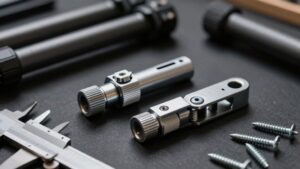
Flip locks expose hardware: lever, hinge, cam, pivot, and latch. Individual components can be easier to source when supported. Yet support matters more than layout: premium service-oriented brands may supply parts for years, while budget models may require whole-leg replacement.
- Check model-specific lock part numbers for your model.
- Confirm direct sales or service-center access.
- Compare kit and whole-leg options.
Accidental Loosening Under Load
Under load, a fully seated twist lock can resist accidental loosening as weight increases friction at its threaded compression interface, while grit beneath a flip lock’s cam can prevent full engagement and reduce clamping pressure.
Either lock can creep if you leave it partially seated. With a twist lock, stopping before the final firm quarter-turn may leave too little compression; with a lever lock, failing to snap it fully closed can leave the cam short of its intended clamping force.
Under load, that incomplete engagement can let a leg section slip even when the lock initially feels secure. Don’t compensate by over-tightening a twist lock: excessive torque can stress seals or threads, later impairing smooth compression and increasing loosening risk.
Before shooting, tighten or close each lock fully, then give the leg section a downward tug. That tactile check helps you catch a weak or partially engaged lock before your camera shifts.
Mud-Cleanup and Maintenance
In mud-heavy conditions, twist locks typically shed grit more effectively than flip locks because their threads and collets sit inside the leg.
Rinse the legs promptly, cycle each lock fully, and check that twist-lock collets seat cleanly; flip-lock cams and hinges need closer cleaning to prevent inconsistent closure or leg creep.
Dry the locks before storage to keep residue from hardening and slowing the next adjustment.
Mud Removal Techniques
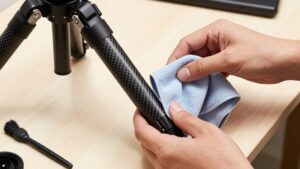
After shooting in mud, fully extend the tripod and wipe each leg section with a dry microfiber cloth before operating the twist locks; removing grit first reduces abrasion in the threads and collets. For caked mud, rinse gently with low-pressure water, then dry completely; moisture can form paste that slows or jams locks.
- Prioritize sections where spray gathers; open and close each collar once as you clean to clear debris from the compression area.
- For field cleanup, tap legs together, brush seams with soft nylon, then release and lock; this dislodges fine particles without tightening.
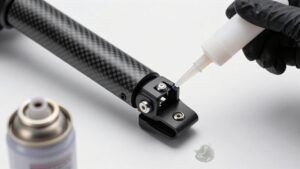
- Avoid lubricant unless specified: grit can trap in oil or grease, increasing creep or sticky release. Twist collars need clean seams to turn; both lock types benefit from grit-free contact surfaces.
Lock Maintenance Tips
To maintain tripod leg locks after muddy use, extend each section fully, wipe grit from twist collars and threads, then rinse or brush the tubes with clean water and close the locks to expel remaining debris.
Twist-lock maintenance needs care: use a soft brush and, if available, dry compressed air around each collar; don’t blast grit into threads or drive particles into the compression collet. In sand or dust, loosen and retighten locks periodically while sheltered. If the final quarter-turn feels gritty or hesitant, stop and clean before continuing; forcing it can wear threads or the collet.
Flip locks avoid threaded collars, but their hinges and clamp surfaces still need debris checks. Let every leg dry completely, especially internal collars and seals, before storage; trapped moisture attracts dirt and can stiffen either design. If operation becomes less smooth, inspect the collar area and avoid over-tightening: excess torque can damage seals or impair compression. Both designs benefit from this routine.
Long-Exposure vs. Wildlife Work
For long exposures, choose the tripod with the firmest post-lock feel and test each leg for creep; lock type alone won’t guarantee stability. For wildlife, twist locks can speed deployment once you’ve learned coordinated quarter-turns, though lever locks may be easier to operate with gloves.
Match the lock system to your subject, conditions, and required setup speed.
Long-Exposure Stability
When long-exposure stability matters more than rapid redeployment, twist locks often have the edge: their sealed internal sleeves are less vulnerable to grit-induced micro-movement than lever-lock cams. In dusty or sandy conditions, that protection can reduce subtle leg creep that softens long exposures. Flip locks remain capable, but you need lock certainty more than speed: confirm each lever snaps clearly, then tug each extended leg downward. For twist locks, turn each collar through its final quarter-turn; don’t overtighten, because excess torque can stress internal seals.
- Lock sections consistently; uneven clamping can shift support under camera load.
- Keep feet planted, and avoid touching the rig during exposure to limit transmitted vibration.
- Choose twists when debris threatens lock contact.
Check your setup before exposing the frame.
Wildlife Deployment Speed
In fast wildlife work, flip locks can get you shooting sooner because each lever’s snap confirms engagement, while twist locks let you tighten several sections in sequence without locating external levers. That sequence can be faster when you extend multiple sections, since you needn’t find and operate each exposed lever. But flip locks can speed a first-time setup: each lever’s snap gives immediate confirmation, helping you move into tracking sooner.
In dusty or sandy terrain, twist locks tend to resist grit better because their internal collets are less exposed than lever clamps. After deployment, give the legs a downward tug and check for creep before you commit to long exposures; tightened collets help keep sections immobile amid wind and subject movement.
Lock Choice By Subject
Your subject often determines which tripod lock is more practical: twist locks suit long-exposure landscapes, where you can tighten sections in sequence and their enclosed collets resist dust and salt, while lever locks suit fast wildlife work, where visible engagement makes lock status quicker to verify.
For either choice, match the mechanism to how you deploy and handle the legs.
- For long exposures, coordinated turns can release or tighten several sections efficiently; finish with firm quarter-turn resistance to limit vibration.
- In dust or salt, enclosed collets and threads expose less mechanism to grit than external cams, lowering jamming risk.
- For wildlife, lever locks give side-on status checks; with gloves, their mechanical advantage and distinct snap can beat fine twisting.
Choose by terrain and pace.
Best Lock for Four-Section Legs
For a four-section tripod, twist locks are usually faster overall because you can loosen several collars with coordinated quarter-turns, while flip locks require opening each lever individually. For dusty or sandy trails, their internal compression sleeves sit less exposed to grit than external cams, reducing jam-related leg creep.
That advantage matters across four telescoping sections, where debris can affect each joint. Choose a model with firm, damped resistance at the final quarter-turn; you’ll feel the last compression stage engage without visual checks. Flip locks can feel faster when you extend one leg at a time, especially with gloves, because each lever gives clear visible or audible feedback.
But across all sections, you’ll open every lever and may need to clear exposed pivots in grit. In clean settings, flip locks’ feedback may suit you; on gritty routes, twists balance speed and durability.
Conclusion
Choose a twist lock when you prioritize compact collars and controlled tension across narrow leg sections; choose a flip lock when you need rapid one-handed deployment and can inspect or clean external cams. Neither system stays faster or tougher in every condition. Match the lock to leg diameter, grit exposure, cold, load stability, and maintenance habits.
For wildlife work, favor quick setup; for long exposures, prioritize secure clamping. Test each lock with your tripod.