Can You Use a Camera Tripod for a Rifle? Safety, Mounts and Better Options
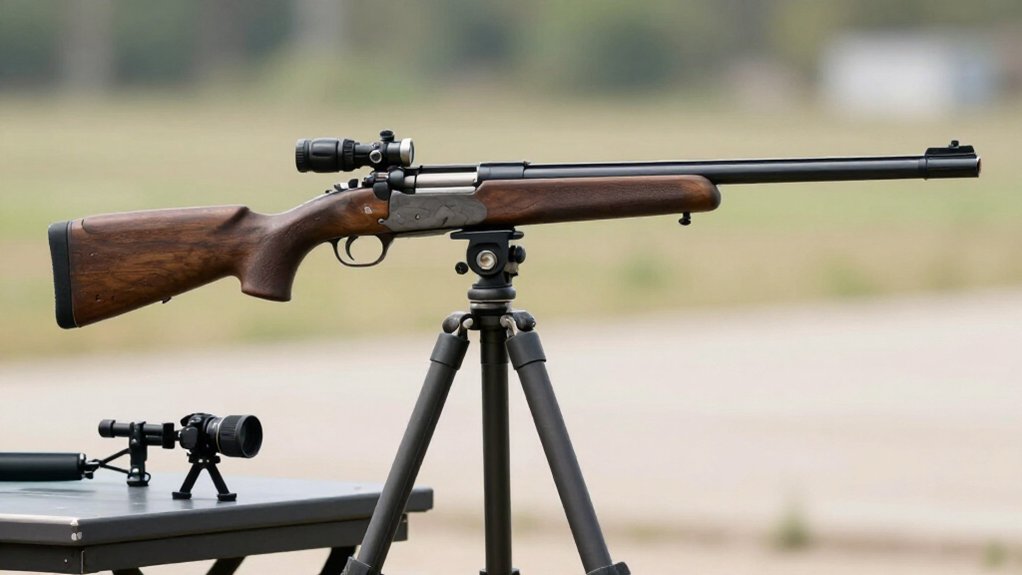
You can use a camera tripod to support a rifle, but you shouldn’t fire from it unless its legs, head, and clamp are specifically rated and secured for recoil.
Camera load ratings usually describe static weight, so compare your fully equipped rifle with each component’s limit and leave a safety margin.
Match the rail and clamp precisely, lock the head, retract the center column, and keep the muzzle pointed safely while adjusting.
More guidance follows.
Camera Tripod Load Limits
Start with your rifle, scope, and accessories’ combined weight, and keep it comfortably below the tripod’s rated capacity—for example, the Vanguard VEO 3+ 263CB 160S lists a 15 kg (33 lb) maximum. Include the mounting head in your check: an undersized ball head can become the weak link, even when the legs carry the load. Leave a safety margin rather than treating the printed limit as a working target. That rating describes a maximum, not a promise of stability during firing.
Recoil adds dynamic force beyond the rifle’s static weight, potentially stressing legs and locking joints; overloaded parts may bend or fail. Keep your setup within conservative limits, secure every lock, and inspect components before use. If you can’t verify the tripod and head can safely support your complete system under recoil, don’t fire from it. Purpose-built rifle tripods may advertise higher support ranges, but confirm the maker’s limits for your exact configuration before you shoot.
Why Camera Tripods Differ
A camera tripod’s weight rating doesn’t tell you how it will behave under recoil. Camera models support light, steady loads; firing creates dynamic forces that can loosen legs, feet, or locks not built for them. Their ball or three-way heads may shift or creep, moving your rifle when you need a stable, repeatable hold.
Rifle-capable tripods use stiffer legs, stronger locks, and heads designed to secure a firearm. They’re built around shooting positions, with adjustable leg angles for prone, kneeling, or standing use, quick-setting hinges, and points for attaching a counterweight. Check the center column, too: a slim column extended high can add movement. Don’t treat a tripod’s capacity as proof it’s safe or precise for rifle use; choose equipment designed for that purpose.
Arca-Swiss Plate Mismatch
Even if both parts are labeled “ARCA,” the rail and clamp may not fit securely together. ARCA-Swiss systems depend on matching dovetail width and profile. Many rifle setups use a 1.5-inch rail designed for ARCA-style clamps, while camera plates may follow different dimensions.
A clamp can appear to close yet engage only the edges, leaving your rifle less secure under recoil. Manufacturers also vary their tolerances; a three-pin design, such as Area 419 ArcaLock, needs its intended scalloped rail pattern and size. Before mounting, check the clamp’s capacity and compare it with the rail or plate’s exact specifications, not just an “ARCA compatible” label. If they don’t match, use the correct adapter or rail system. Don’t add padding or force the plate into place.
Ballhead vs. Rifle Clamp
A ballhead lets you pan and tilt smoothly, but it may not hold your rifle securely against recoil. Check that your mount fits the rifle’s attachment system, including any ARCA plate, before use.
For steadier hands-off shooting, choose a padded rifle clamp designed to resist movement and protect the stock.
Stability and Control
For reliable firing, choose a head that secures the rifle securely under load. A ball head gives you fine pan and tilt control, but tighten and lock it before firing. Recoil can make a loose head creep; slight movement can alter your sight picture. Use its level indicator to align your reticle on uneven ground, but leveling doesn’t ensure a secure, nonslipping hold.
A designed-for-the-job rifle clamp grips the stock more repeatably and resists recoil better than camera-style plates or V-notches, which may slide or mar the stock under steady pressure. It also gives you predictable lock-up when you change positions quickly. Ball-head knobs can be awkward to manage with the rifle in place. Check that the head and clamp stay locked and stable.
Mounting Compatibility
Once the head stays locked under load, check how the rifle attaches to it.
A camera ball head can support a rifle when you secure an ARCA-Swiss rail or plate in a compatible clamp. Check the head’s load rating and confirm its pan and tilt locks prevent creep under recoil. Many ball heads allow movement through adjustable tension; don’t assume that tension alone will hold the setup stationary.
Select an adapter that prevents rail slippage, and verify the ARCA style and any screw pitch match your equipment.
A purpose-built rifle clamp may fit a stock more securely with a V-notch or cradle, while a ball head lacks that geometry by itself. After assembly, test the mount safely and confirm no movement during the firing cycle.
Rifle Clamp Advantages
When you need a steadier, better-supported mount, a purpose-built rifle clamp usually beats a generic ball-head setup. Its wider, purpose-shaped contact surfaces support the stock or ARCA-style rail, while non-marring pads help protect the finish and reduce wiggle. A dedicated clamp also keeps your rifle centered over the tripod, improving balance as you adjust your position and through the firing cycle.
A ball head still offers useful pan and tension controls. You can fine-tune aim and lock the head to limit drift, but the added clamp or plate may permit micro-movement if the assembly isn’t rigid. Before using one, confirm ARCA compatibility, adapter screw pitch, rated load, and tilt range. Don’t fire until the rifle is securely captured and stable; recoil can expose a weak connection.
Rifle Weight and Recoil
Check your rifle’s weight against the tripod’s rating, but don’t assume that meeting it makes the setup safe to fire. Recoil creates a sharp impact that can twist mounts, loosen locks, or destabilize thin, extended legs.
Use a rigid tripod rated for recoil, and keep the center column low to improve stability.
Rifle Weight Capacity
Start by comparing the tripod’s published load rating with your rifle’s actual weight, including its scope and other attached gear. Include gear such as a sling, bipod, or muzzle brake in that total; don’t rely on bare rifle weight. Choose a tripod whose capacity comfortably exceeds the complete setup, rather than one that merely matches it.
Check the head and clamp ratings separately; the legs’ rating alone doesn’t establish that the mounting points can safely support your rifle. For context, Vanguard VEO 3+ 263CB 160S lists 15 kg (33 lb), while SIRUI Traveler 5C lists about 3.99 kg (8.8 lb). That gap matters when you’re evaluating a heavier rifle. A roughly 2 kg (4.4 lb) Amazon Basics tripod may be unsuitable for hunting or precision rifles.
Recoil Stress on Tripods
Although your rifle may fit within a tripod’s published weight limit, recoil creates sudden forces that a static-load rating doesn’t cover.
Recoil drives rapid rearward and vertical shock through the head and quick-release plate. Inspect threads, clamps, and ARCA plates: the mounting interface may fail before the legs. Don’t assume a camera payload rating covers firing.
A lightweight carbon tripod can support precision shooting, but an extended center column can flex and bounce, moving the head at the shot. If you use a camera ball head, lock it fully; recoil can make it slip and shift point of impact between shots.
Treat recoil separately from rifle weight: a 45-85-pound-rated tripod differs greatly from a 4.4-pound-rated travel model. Never assume camera ratings cover firing-cycle stress. Choose a proper rifle mount.
Stability Under Load
A tripod’s stated load rating doesn’t guarantee stability under rifle weight and recoil. A lightweight camera model rated around 2 kg (4.4 lb), such as a 50-inch tripod, may fall below your rifle-and-optic weight and flex under firing forces.
Check more than the number: extended, narrow legs, loose locks, and a slim center column can amplify movement.
Choose stiff, stout legs, thick tubes, and feet that grip; purpose-built designs may combine rubber feet with metal spikes. Your head matters, too. A ball head must hold pan and tension without creeping, or shifts can spoil alignment even if the legs stay upright.
Prefer a rifle tripod with generous capacity, such as 15 kg (33 lb), for margin. Never fire until each lock and mount is secure.
Field Varmint Shooting
For field varmint shooting, most camera tripods aren’t built to support a rifle steadily through firing, so check the load rating and locking hardware before using one. Most handle camera loads, often single-digit kilograms, and may wobble when you relax your grip.
If you use one, choose a rating of 15 kg (33 lb) or more, with a ball head and locks that stay immobile under recoil. Keep the center column retracted; loose panning tension can shift your sight picture. Secure the rifle with a non-marring ARCA-Swiss clamp or proper rest adapter, not a slick V-notch.
Favor quick, one-handed leg-angle locks and feet for prone, kneeling, or standing setups. Between targets, a rifle-capable system is safer; some mounts require moving the tripod, not reindexing its head.
Wind and Ground Conditions
Wind and uneven ground can expose weaknesses in a camera tripod, so keep its head tension high and center column retracted to limit reticle movement.
On grass, gravel, or rocks, a tripod may shift or rack under recoil; a level indicator won’t prevent lost alignment. Wet grass and dirt can make rubber feet skate. Choose aggressive tread or fit spikes or cleats when conditions turn slick. Keep the legs short and use fewer sections on loose soil, soft sand, or standing water, where vibration prolongs settling. Verify the rifle and tripod’s combined load stays within specification, and don’t trust lightweight camera clamps to withstand recoil.
| Condition | Action |
|---|---|
| Wind | Tighten head; retract column. |
| Slick ground | Add spikes or cleats. |
| Soft ground | Lower tripod; verify load. |
Ignoring Muzzle Direction
Never aim a rifle by “pointing the camera” on a tripod. Smooth camera heads can swing your muzzle when released or bumped. Keep the muzzle controlled; never cross people, vehicles, or targets.
Before you adjust or reposition, follow these checks:
- Keep the muzzle pointed in a safe direction while extending or changing legs.
- Make small movements with the head released, and watch the muzzle.
- Lock the legs and head before you aim or fire.
- After moving the tripod to a target, recheck muzzle direction before and after repositioning.
A loose lock or shifting center column can move the rifle unexpectedly, changing where it points downrange. Don’t assume a stable-looking camera setup means safe control. Pause, confirm direction, and correct any shift before proceeding.
Check Manufacturer Load Ratings
Check the manufacturer’s load rating before using a tripod to support a rifle. Check your tripod’s official maximum capacity against your rifle and optic weight, but don’t treat static weight as the whole test: recoil and off-axis leverage add force.
A camera-use rating may not cover firing stresses. Verify the head’s limit separately from the legs’; use the lower figure. Choose a centered, properly supporting mount, and confirm the maker approves rifle support on a firing line. If you’re near or above either limit, don’t fire; shifting or failure can cause injury.
| Check | What to verify | Safety cue |
|---|---|---|
| Legs | Published capacity | Don’t assume |
| Head | Lower rating | Stay below |
Before buying or shooting, read manufacturer guidance: “maximum load” may describe camera use, not recoil. If approval’s unclear, contact the maker or choose a rifle tripod rated for your application. Recheck mount security before use carefully.
Conclusion
You can use a camera tripod for a rifle only when its rated capacity, head, and attachment are suitable—and you verify every connection. Don’t assume an Arca-Swiss plate fits, or that a ballhead can control recoil.
For steadier field shooting, choose a purpose-built rifle clamp or shooting tripod matched to your rifle and conditions. Check the manufacturer’s limits, stabilize the legs, and keep the muzzle pointed safely downrange at all times before you fire.