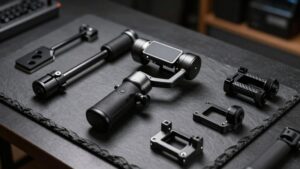
Can a Gimbal Go in Checked Luggage? Airline Battery Rules to Know
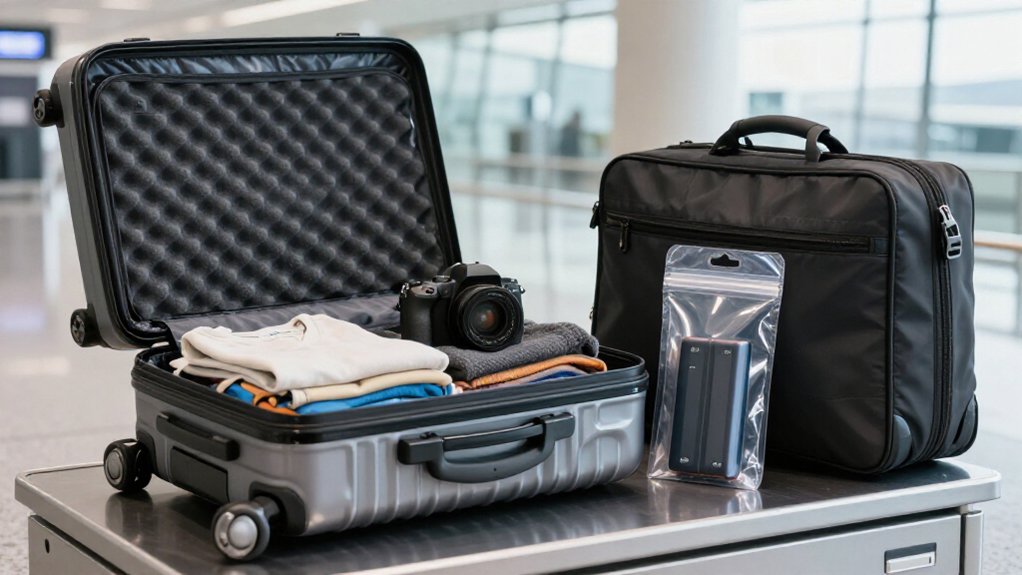
You can usually check a gimbal if its installed battery meets your airline’s limits, but policies vary.
Remove detachable batteries and carry them in your cabin bag; don’t pack spare lithium batteries loose in checked luggage.
Check the battery’s watt-hour rating: spares under 100 Wh are allowed in cabin baggage, while 100–160 Wh typically need airline approval.
Protect terminals, switch off and secure the gimbal, and confirm your carrier’s rules.
More packing guidance is ahead.
Battery-Powered Gimbal Rules
If your gimbal uses a lithium battery, follow the rules for spare lithium batteries: carry detached spares in your cabin bag, with each battery’s terminals protected in its original case or with tape. Check each spare’s watt-hour rating before travel. If it’s under 100 Wh, you may carry up to four spares in your cabin bag.
For a battery rated 100–160 Wh, the limit is two. A 160–300 Wh spare requires advance contact with and approval from your airline; don’t assume it’ll be accepted. Many camera-style batteries are around 14–16 Wh, but verify the label rather than relying on typical values.
Keep every spare separate from the gimbal and secure its contacts to prevent short circuits. Follow stricter airline instructions, and confirm approval requirements before you leave.
Checked-Bag Battery Restrictions
After securing spare batteries for carry-on, check what can remain with your gimbal in checked luggage. Most rules prohibit loose or detached lithium batteries in checked bags, so don’t pack a removable battery there. Carry it in the cabin with the gimbal. Protect every spare battery individually against short circuits: use its original packaging, cover exposed terminals, or place it in a separate protective pouch.
A gimbal with its battery installed may be eligible for checked baggage when the equipment and battery meet your airline’s requirements. Policies vary, and some carriers restrict equipment with larger batteries. Before you check the case, confirm your airline’s current rules and secure the gimbal against accidental activation or damage. If the battery comes out, keep it with you.
Gimbal Battery Watt-Hour Limits
Check each gimbal battery’s watt-hour (Wh) rating, because eligibility depends on the battery’s capacity, not on what else you pack.
For spare lithium-ion batteries under 100 Wh, you can generally carry up to four in your cabin bag. Batteries rated 100-160 Wh typically need airline approval, and airlines commonly limit you to two spares. Confirm current rules with your carrier before travel; approval and quantity limits can vary.
At 160-300 Wh, contact the airline’s Special Assistance team before flying. These batteries aren’t ordinary carry-on spares, so don’t assume you may bring one aboard. Avoid gimbal spares over 160 Wh: they’re generally prohibited in passenger luggage. Check the printed rating on each battery and follow any stricter carrier instructions. Keep the rating visible for inspection.
Gimbal Battery Types
Your gimbal may use lithium-ion cells in a built-in battery or a removable pack, and the battery type affects how you pack it. Keep spare lithium-ion batteries in your carry-on, not checked luggage, and protect each pack’s terminals from short circuits.
Check the watt-hour rating and your airline’s rules, especially for packs near or above 160 Wh.
Lithium-Ion Batteries
Most camera gimbals use rechargeable lithium-ion batteries, and removable spare packs must travel in your carry-on, with each battery’s terminals protected in a case or with tape.
Check each pack’s watt-hour (Wh) rating on its label; common camera batteries often fall around 14–16Wh, but don’t assume yours does.
For spare lithium-ion batteries under 100Wh, you may carry up to four. A pack rated 100–160Wh permits up to two spares. If a spare is rated 160–300Wh, contact the airline’s Special Assistance team before you travel. Check the carrier’s rules for small, medium, and large battery categories: airlines may restrict medium packs and prohibit large ones, even when general limits appear to allow them. Keep spares in your carry-on, never checked baggage.
Built-In Batteries
Unlike spare packs, a lithium-ion battery built into your gimbal is generally allowed in carry-on or checked luggage if you switch the gimbal off and protect it from damage.
A built-in battery remains installed in the equipment, so it isn’t subject to the spare-battery watt-hour limits. Before packing, confirm the battery is truly integrated rather than designed to detach; airline treatment may differ based on battery construction and size. Turn off your gimbal completely, not standby, and secure controls to prevent accidental activation during handling.
Cushion it against impact and movement, and keep it from being crushed by other baggage. Check your airline’s current requirements before travel, since carriers may impose stricter conditions for equipment containing lithium-ion batteries, and follow any applicable packing instructions.
Removable Battery Packs
If your gimbal uses a removable lithium-ion battery pack, carry the pack in your cabin bag, not checked luggage. Treat each extra pack as a spare. For packs under 100 Wh, you can typically carry up to four spares; for 100–160 Wh, up to two.
Packs rated 160–300 Wh require Special Assistance, and airlines generally don’t permit batteries above about 160 Wh. Check your carrier’s limits and approval requirements before travel. Protect each battery’s terminals individually by keeping it in its original case or covering them with tape, so metal objects can’t cause a short circuit. You can usually pack the charger in either cabin or checked baggage. Built-in batteries may be checked if switched off and properly protected.
Airline-Specific Policies
Check your airline’s policy before packing your gimbal, since rules for attached and spare batteries vary. Confirm each battery’s size and quantity allowance; spare or detached lithium batteries must stay in your carry-on.
If your trip includes a partner airline, review its rules too, as they may differ.
Check Your Airline’s Policy
Before packing your gimbal, confirm your airline’s rules for lithium batteries, since carriers may require spare or detached batteries in carry-on baggage and prohibit them in checked bags.
| Carrier | What to verify |
|---|---|
| American, Delta, Lufthansa | Move spares and removable batteries to carry-on |
| Cathay Pacific | Detached batteries aren’t checked |
| United | Detached batteries generally aren’t checked |
An installed battery may count as attached equipment, which some airlines accept in checked luggage; removable spares usually belong in your carry-on. Check the current rule for your route, and don’t assume another carrier applies the same standard. If the wording’s unclear, contact the airline before departure. Follow its instructions at check-in, where staff may assess the gimbal and battery separately.
Save the relevant page or screenshot for staff.
Confirm Battery Allowances
Battery allowances depend on both the airline and whether the battery is attached or detached.
For American, you can’t check detached lithium batteries. You generally must remove attached batteries and carry them on, unless a battery is non-detachable and you make the required special request.
Delta and United don’t allow detached batteries in checked luggage, but typically permit checked equipment with small or medium batteries attached; large batteries aren’t allowed under their limits. United allows at most two medium batteries in carry-on baggage. Cathay Pacific permits up to 20 small or two medium batteries in carry-on; it prohibits large batteries.
Before checking your gimbal, confirm its watt-hour rating: batteries from 100 to 160 Wh typically need airline approval, and over 160 Wh are generally prohibited.
Review Partner Airline Rules
Because partner-airline rules can differ, confirm the operating carrier’s policy before packing your gimbal.
Before you travel, check each operating carrier’s limits on connections and codeshares. United doesn’t allow detached lithium batteries in checked baggage, but permits equipment with small or medium batteries attached. If a battery can’t be removed, United directs you to remove all batteries and carry them on.
American, Delta, and Lufthansa guidance generally requires spare batteries in your carry-on and may require special handling for non-detachable batteries.
Cathay Pacific allows checked equipment only with small or medium batteries attached; it bars detached batteries and large batteries from checked bags. When you’re unsure, carry your gimbal and loose batteries onboard. Pack or ship items requiring checked transport only under the carrier’s rules.
Packing a Gimbal for Security
For a smoother security screening, pack your gimbal where officers can inspect it easily, and be ready to turn it on if asked.
A camera gimbal is generally permitted in either carry-on or checked baggage, although TSA officers make the final screening decision. Keep it accessible, ideally outside a crowded bag, so you can present it promptly. If it has a lithium-ion battery, carry the gimbal with you when practical; an installed or permanently attached battery may be allowed in checked baggage.
Spare lithium-ion batteries must travel in your carry-on, not checked baggage.
For spares under 100 Wh, you may carry up to four; from 100 to 160 Wh, up to two. At 160 to 300 Wh, first contact your airline about required assistance before travel.
Loose Battery Terminals
To prevent short circuits, carry spare lithium batteries in your carry-on with each set of terminals individually protected in a case, sleeve, or taped over. Loose contacts can trigger extra screening, handling, or confiscation. If your gimbal travels checked, remove removable batteries and pack them in cabin baggage; checked items can press against exposed terminals.
| Item | Safe action | Rule |
|---|---|---|
| Spare cells | Separate sleeves | Prevent contact |
| 100 Wh | Standard limit | Carry-on |
| 100-160 Wh | Maximum two spares | Carry-on |
| Over 160 Wh | Contact airline | May be restricted |
Check battery’s watt-hour rating before travel. Above 100 Wh, limits tighten: airlines allow no more than two batteries from 100-160 Wh, while higher-capacity units may be restricted and require airline approval. Don’t leave cells loose near metal objects.
Forgetting Gimbal Lock
Protected battery terminals prevent electrical shorts, and securing the gimbal prevents handling problems. If you’re checking your gimbal, open its head before packing it in a padded case. Unlocked arms can swing during rough handling, increasing damage risk; airlines may not cover handling-related damage.
Loose parts or exposed accessories may prompt screening, and an officer could ask you to open the item or power it on. Use these steps:
- Lock the head and arms, then place the unit in padding so movement and impact don’t strain joints or controls.
- Keep spare removable lithium-ion batteries out of checked luggage; carry them on with terminals protected.
- Confirm installed batteries meet limits; batteries rated 100–160 Wh may need approval, and spare quantity is capped at two.
Check Airline Battery Policies
Check your airline’s battery rules before packing a gimbal, since detached lithium batteries generally must travel in carry-on baggage. Before departure, confirm the rules for your route and aircraft; policies can vary. If your gimbal has an installed battery, your airline may permit it in checked luggage, but you may need to remove a removable battery and carry it in the cabin.
Only a battery the manufacturer identifies as non-detachable may qualify for an exception. Check each battery’s watt-hour rating: spares under 100 Wh are usually allowed in carry-on; batteries from 100 to 160 Wh typically need airline approval and may be limited to two. Batteries over 160 Wh generally can’t travel in passenger baggage. Some carriers, including American, cap spare quantities; Lufthansa- and United-type rules bar detached batteries from checked bags. Protect terminals and follow your airline’s stated limits before you fly.
Conclusion
You can usually pack a gimbal in checked luggage if you follow battery rules. Keep spare lithium batteries in your carry-on, protect their terminals, and check watt-hour limits. If the gimbal’s battery is installed, confirm whether your airline permits it in checked baggage; switch the device off and secure its lock.
Before you travel, verify current airline and security requirements. When rules are unclear, carry the gimbal and batteries in the cabin to reduce risk and avoid delays.