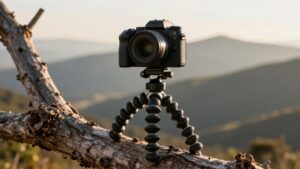
Shooting Sticks vs Tripod: Which Rest Is Steadier for Hunters?
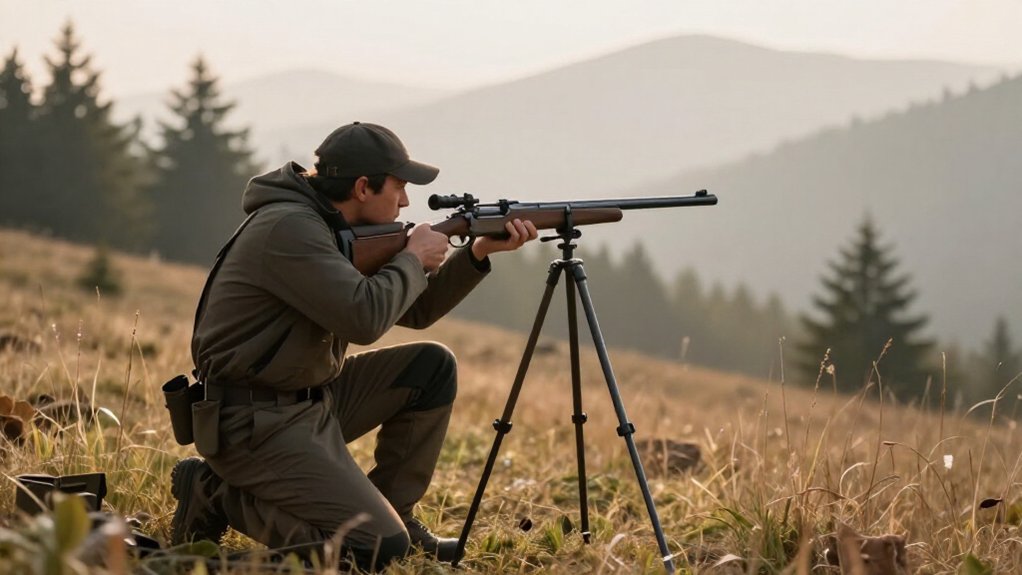
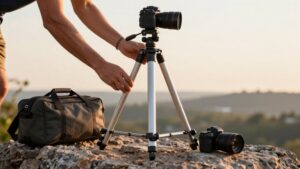
A tripod usually holds steadier on firm ground because its three legs create stable geometry. But you may shoot more steadily with sticks in broken Karoo terrain, where quick planting and repositioning matter more than sustained support.
Plant the feet firmly, maintain consistent rifle contact, and replant when your angle changes; soft ground can shift aim with either rest.
Your position, optic balance, and terrain determine which setup suits the shot. The key trade-offs become clearer with each factor.
Karoo Terrain and Hunting Style
In broken Karoo veld, low grass and uneven ground can make prone or kneeling positions difficult to hold, so shooting sticks often offer the more practical plant-and-shoot rest. That terrain rewards a rest you can reset without rebuilding your position.
When an animal appears briefly, set sticks from standing or kneeling and settle your reticle; you avoid committing to a slower tripod deployment, especially when your tripod already carries glass. On uneven ground or a seated angle, adjust the sticks to your planned shot position so you can maintain steady follow-through and make an ethical decision.
| Field condition | Practical choice |
|---|---|
| Brief window | Faster stick setup |
| Broken ground | Confidence for ethical shot |
Choose the rest that keeps your response deliberate, not rushed.
Shooting Rest Mechanics
A shooting rest steadies your rifle through its contact points with the ground and firearm. With shooting sticks, you plant the feet, then marry the rifle to the support. Your body angle and steady hand pressure help control sight movement, but the sticks remain separate from the firearm.
When you change position, you’ll often need to replant and realign them.
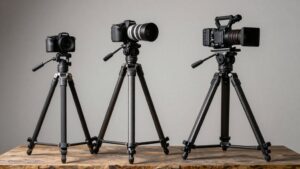
A tripod’s multi-leg base provides repeatable geometry. Once set, the rifle shows less drift than on a single stick.
Bipods and tripods stabilize at the firearm connection point, unlike external sticks you adjust to. Sticks deploy and reposition faster, but a loose or mismatched rest can keep your reticle from settling. This undermines trigger control and follow-through after recoil, so match the support to your rifle and maintain consistent contact.
Uneven-Ground Shot Grouping
On uneven ground, your rest’s contact with the terrain can shift your point of aim from shot to shot.
Bipods often lose consistency when one leg rests on rock and another sinks into dust or grass, widening groups. Shooting sticks let you adjust each leg’s planting angle and align your body to the rifle, helping you marry the support to broken ground. A tripod’s three contact points generally resist differential settling after recoil, so it holds steadier.
For seated or kneeling shots on slopes, match support height and angle to your position; sticks can support a shot over brush or across a side hill. Grouping depends on firm ground contact. If any foot shifts on soft soil, your sticks, bipod, or tripod can degrade accuracy.
Fast Setup in Thick Brush
When thick brush blocks a clean prone position, shooting sticks let you stop, plant the legs, and shoulder the rifle with minimal delay. That speed matters in thornveld, where an animal may appear briefly and a tripod’s wider, bulkier frame can snag or demand extra repositioning. Sticks also let you respond to broken-cover angles by changing leg height or plant point while maintaining a rigid rest.
- Plant both legs firmly before shouldering; avoid loose debris that can shift.
- Set height quickly to clear grass, brush, or an obstructed lane.
- Use taller sticks when cover forces a high or angled position.
- Marry the rifle to the planted rest; reduced sight movement supports trigger control.
A tripod may steady better, but sticks win when seconds count.
Rifle Stock Attachment Points
Because every rest must interface consistently with the rifle, check the stock’s attachment points before choosing sticks, a bipod, or a tripod. A clamp or strap needs a suitable fore-end surface; a dedicated rail or adapter can provide a more repeatable seat. M-LOK or Picatinny sections usually offer rigid mounting, while smooth wood or round fore-ends may let the rest rock and delay reticle settling.
Prefer a fore-end attachment when possible: it controls the rifle near its support point and generally steadies the barrel line better than a stock or butt mount. Before buying, measure the mount’s distance from the action, forend width, and seating length. Confirm the rest reaches your height without forcing an awkward angle that could compromise stability in the field.
Replacement-Part Availability
Replacement-part availability can matter as much as initial stability: established bipod and tripod makers often stock leg locks, hinges, and heads, making field repairs easier.
- For bipods and tripods, verify leg locks, hinges, and heads are stocked; replace worn parts before they affect your setup.
- Carbon-fiber tripods can remain serviceable and light, but a damaged camera- or rifle-mount head may require a brand-specific replacement.
- With shooting sticks, you’ll usually find budget-friendly fixes in standard legs, feet, or height sections, not complex mechanisms.
- Check height limits, too: a seated bipod near 27 inches may not meet your needs, while taller sticks might.
Widely stocked parts reduce downtime and help you preserve consistent rigidity when you take the shot. Keep a spare set in your pack.
Wind-Driven Platform Sway
In gusty conditions, a tripod’s wider base and firmer loaded support usually damp sight movement better than shooting sticks. Wind acts like a pendulum on any rest, but a tripod’s higher effective spring under load helps your reticle settle.
On ridges, koppies, and rocky slopes, changes in leg height or plant shift your rifle’s pivot point. Sticks often make less consistent ground contact, so you must marry rifle, rest, and body angle. A gust can nudge the rifle and delay reticle recovery.
Uneven footing can amplify movement, especially when one stick plant grips rock while another lands on dust. A tripod’s rotational freedom lets you correct aim without shifting the platform; with sticks, you may need to reposition to counter sway.
Quick Field Repairs
Carry an Allen key and cord or zip ties so you can tighten loose joints and secure a slipping leg. Replace worn foot pads, and clear grit from locking surfaces before assuming a part has failed.
If a carbon-fiber leg breaks, don’t force it; shorten the remaining legs or switch to shooting sticks.
Tighten Loose Fasteners
Before settling into your shooting position, check each leg lock, hinge, and height-adjustment fastener; snug anything loose with a firm hand twist so the support won’t shift under the rifle’s load.
- Tighten at your actual field height—prone, sitting, or standing—before building cheek-to-stock alignment.
- Keep a coin or correct hex key in your pocket to secure clamp-style heads quickly.
- After changing terrain or rotating position, recheck head tilt, pan, and rapid-pivot fasteners; carbon-fiber legs can loosen at their interfaces.
- Rest the rifle gently on the support and apply light forward pressure. If it wobbles, snug the joint, then repeat the loading test before managing trigger control and follow-through.
That check helps you commit to trigger control and follow-through with support beneath your rifle.
Replace Damaged Components
A compact spares kit can keep damaged shooting sticks or a tripod usable in the field. Carry spare rubber feet, locking pins, springs, and an Allen key.
If an adjustment leg slips, replace its locking pin or spring, or the quick-height module’s worn contact surface; a moving rest won’t let your reticle settle for ethical shot control. For sticks, replace a broken or split forearm contact insert to preserve consistent rifle fit and follow-through when you break position.
For a tripod, reseat gritty or loose leg joint surfaces, or replace a damaged clamp pad. This restores rigidity, especially at standing height, where extended legs magnify wobble. Document each repair and retain your height and angle marks, so your next shots regain your stability settings.
Shooting-Prone Position Support
From prone, a bipod usually gives you direct rifle support, while a tripod needs careful setup to keep the reticle steady. On uneven ground, plant and load each support point consistently to limit wobble.
If broken terrain prevents a stable laydown, shooting sticks can help you hold a repeatable position.
Bipod Support From Prone
When you drop into prone and lock a bipod under the forend, you’ll typically feel the difference immediately: that mechanical connection to the ground cuts vertical wobble and lets the reticle settle in a way sticks rarely match. On firm ground, set the legs at a usable angle; the bipod supports the rifle without requiring you to press your body into sticks for comparable steadiness when terrain allows.
- Adjust leg length for the needed height while keeping a repeatable shoulder and cheek weld.
- Use the stable position for quick follow-up shots; consistent contact helps the reticle return.
- Expect less stability when grass, uneven ground, or broken terrain blocks leg placement.
- Check reach on angled ground; some models stop near 27 inches, limiting useful height.
Tripod Prone Adaptations
For a low shooting-prone position, lower the tripod’s center column and splay its legs so the rifle sits close to the ground while the base stays planted. That support takes strain off your arms during long waits; you won’t need to hold the rifle steady by hand as you would in unsupported prone firing.
Unlike a bipod, the tripod’s platform can rotate to track an animal without forcing you to reposition the base. For western big-game hunts, this setup can help you settle into a steadier prone position when a shot may exceed 500 yards. You’ll still need to manage the ground, and deployment can be slower and bulkier than with shooting sticks.
Choose this adaptation when precision from a low angle matters more than speed or compact carry. Set the rifle into the cradle, confirm the platform’s lock, and maintain a consistent cheek weld before you begin the shot sequence.
Stability On Uneven Ground
On uneven ground, a bipod can feel unstable in a shooting-prone position if one foot rests on rock while another sinks into dust. That mismatch keeps your rifle from settling consistently. Shooting sticks work better because you can plant each leg independently, adjust its angle and length, and reduce lateral wobble.
- Set each foot on firm ground; avoid rocking contact.
- Match leg lengths to the slope before shouldering your rifle.
- Marry the sticks carefully to your rifle; loose contact can move your reticle.
- Replant promptly when an animal shifts position.
A tripod can hold a long aim steadily when all feet sit on solid ground, but it’s bulkier and slower to reposition. Assess plants carefully; poor contact moves your reticle.
Karoo Thermal-Optic Balance
With a thermal optic aboard, balance can matter more than rest height: a front- or top-heavy rifle may make an extended bipod feel as though it wants to dip. That imbalance can pull your muzzle off target during recoil and follow-through.
In the Karoo, planted shooting sticks let you manage optic weight with body angle and hand pressure, stabilizing enough when you marry the rifle to the rest.
A tripod remains the steadier choice for thermal-optic loads and longer holds. But shooting sticks deploy faster, which can matter when a kudu bull gives you time to set up.
If your optic pushes you into a sitting or kneeling position, sticks or a bipod fit better than forcing a tripod-prone angle the terrain won’t support.
Conclusion
In the Karoo, choose your rest for the shot you expect. Shooting sticks give you faster setup in thick brush and simpler repairs, while a tripod offers broader support on uneven ground and steadier prone positioning. Match the rest to your rifle’s stock attachment points, then test grouping and optic balance before hunting.
In wind, brace the platform and avoid excessive extension. If you’re moving often, prioritize speed; if you’re holding a shot, choose stability.