Are Aluminum Tripods Good for Beginners? Why They’re the Smarter First Buy
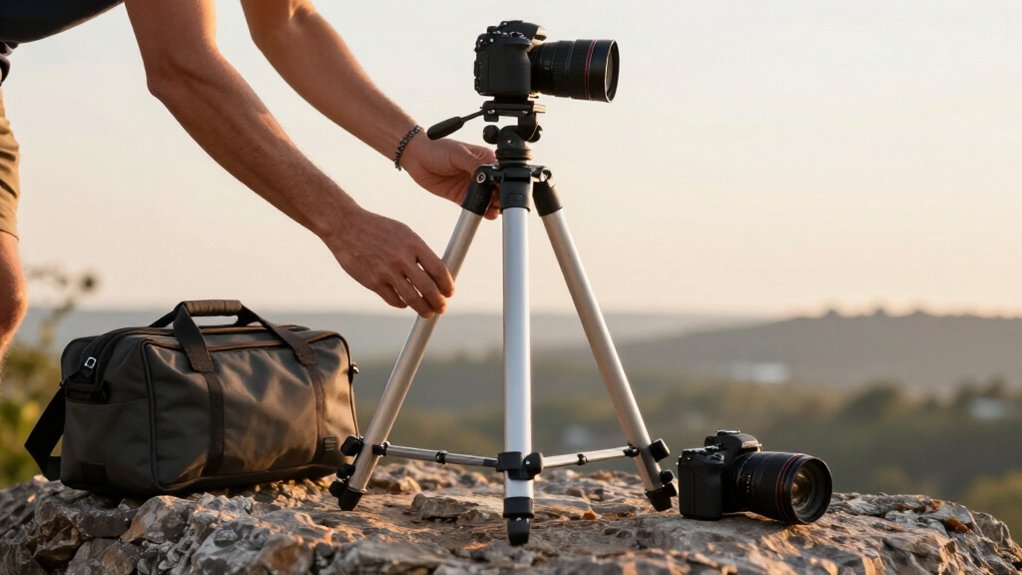
Yes—an aluminum tripod is a smart first buy because its extra weight helps steady your camera against wind and bumps. Compared with ultralight models, it may wobble less, though it’s heavier to carry.
Choose sturdy leg locks, keep the center column low, and prioritize rigidity over maximum height.
For still photos, a ball head makes reframing easy; controlled video may call for a pan-tilt head.
Check plate fit, parts, ratings, and warranty before choosing.
Aluminum’s Easier First Setup
When you’re learning to set up a tripod, aluminum’s extra weight can make the process more forgiving than it is with an ultralight carbon model.
Many entry-level aluminum travel tripods use simple twist or flip locks and a basic ball head, so you can extend the legs and level your camera with fewer steps. That layout helps you learn adjustments.
The added mass also makes a bump while you’re framing less likely to disrupt stability than it would with a light carbon setup. You can make corrections with less risk of restarting.
Aluminum designs often favor rigidity over maximum height, reducing wobble from thin extended sections. When you’re new to tripods, that steady feel supports faster framing and a confident set-and-shoot workflow.
Indoor Versus Outdoor Use
Outdoors, an aluminum tripod’s extra weight can improve stability in wind and reduce wobble compared with an ultralight travel model. That advantage matters when you photograph in breezy conditions or on uneven ground, where a very light tripod may shift more easily.
Indoors, wind and ground variation usually matter less, so the added weight offers less practical benefit. You can prioritize a quick, confident setup and a simple ball head that lets you frame shots without fuss.
Aluminum also suits beginners who move gear often or may bump it accidentally; it generally handles hard knocks better than carbon fiber, which can crack after a severe impact. For mixed indoor and outdoor use, its sturdiness and easier access to replacement parts can reduce downtime.
Leg Lock Reliability
Beyond overall sturdiness, reliable leg locks help make an aluminum tripod beginner-friendly. Twist locks and flip clamps can feel more certain when tightened, lowering the chance that a leg slips during setup. Aluminum’s extra mass also limits movement if you haven’t snugged a lock perfectly, making it more forgiving than light carbon travel models.
| Lock style | Practical check | Trade-off |
|---|---|---|
| Twist locks | Clamp cleanly | Repeated turns |
| Flip clamps | Lock quickly | Confirm each leg |
Choose locks that clamp cleanly without repeated tightening; rubberized twists that need adjustment slow you down and invite mistakes. Fast, consistent locking matters when wildlife or weather shifts, since delays can cost an opportunity before you assess stability. Secure the legs rather than relying on the center column, which can wobble when touched.
Ball Versus Pan-Tilt Heads
A ball head lets you loosen one control, reframe quickly, and tighten it again, while a pan-tilt head adjusts each axis separately for steadier video movement. For mostly still photos, you’ll likely find a ball head simpler to use; pan-tilt heads suit you better if you plan to track or pan deliberately.
Under $100, a basic ball head can help you learn composition, but choose a stable, easy-adjust model for quick framing.
Ball Head Quick Adjustments
When you’re framing still photos, a ball head lets you loosen one control, adjust the angle, and lock it again; often faster than changing pan and tilt separately. For a beginner, that simple, one-and-done motion makes quick composition changes less fiddly: release the control, point your camera, then tighten it. Many pan-tilt heads ask you to manage separate controls, so repositioning for a still shot can take longer.
Their smooth, controlled horizontal and vertical movement suits video, but extra adjustments may slow you when you just want to point, compose, and shoot.
On tripods under $100, a basic ball head often comes with a quick-release plate, so you can attach or remove your camera quickly. Before buying, check that the head locks securely; a loose plate or center column can let either design wobble.
Choose the setup that feels easiest to operate, then verify its locking action before you make your choice.
Pan-Tilt Precision
Head choice affects more than quick adjustments: ball heads usually make precise still-photo framing simpler, while pan-tilt heads offer more controlled, repeatable movement for video-like pans and tilts. For stills, a ball head lets you position your camera and lock the composition with one lever, avoiding separate knob adjustments. That’s often enough precision for a smartphone, compact camera, or mirrorless kit lens. You can find a composition and shoot before wildlife moves or weather changes.
A pan-tilt head gives you separate control over each axis, which helps when you need smooth, consistent movement. But it’s typically slower to frame still photos, and inexpensive models may wobble or slip on weak friction surfaces. For long exposures, that can undermine a carefully set composition. Choose based on whether you prioritize still framing or controlled motion.
Ease Of Use
For beginner still photographers, a ball head is usually easier to use because one lever lets you loosen, reframe in several directions, and lock the camera again.
With a pan-tilt head, you adjust separate controls for horizontal and vertical movement, then tighten them independently. That setup can give you deliberate control, but it takes more steps to compose a still image.
When wildlife moves or weather shifts, those extra adjustments may cost you a moment. A ball head lets you change angles with fewer controls, so you’ll respond without working through multiple knobs. If your tripod also has a flippable landscape-to-portrait mount, its extra movement points may feel less stable than a direct ball-head adjustment.
Your leg locks still affect setup time: twist locks need loosening and tightening. Overall, the head’s simpler workflow can reduce framing adjustments before you take a shot. You spend less time adjusting, more time shooting.
Best Beginner Choice
A ball head is usually the better first choice for still photography: loosen one knob, reframe quickly, and lock the camera in place. For most beginners, this one-lever workflow helps you respond when wildlife moves or weather changes. A pan-tilt/video head suits you better if you need smooth, controlled pans and tilts for video, but its separate adjustments typically slow quick stills setup.
If you mainly take photos, choose a sturdy aluminum tripod with a ball head. Aluminum’s extra mass helps stability, while the head keeps repositioning fast, so you’ll spend more time shooting. Check that its quick-release plate mounts securely and locks without wobble. A loose mount can undermine confidence and frustrate you.
Choose a pan-tilt head when controlled video movement matters more than speed.
Starter Kits by Camera Type
Match your tripod to your camera: a compact kit can handle a phone or small camera, while a mirrorless kit benefits from sturdy leg locks and added weight for wind resistance.
For a DSLR starter kit, choose aluminum that can support the heavier body and lens without wobbling. If you shoot casual video, prioritize quick head adjustments, and don’t rely on a raised center column for extra height.
DSLR Starter Kit
When you pair a DSLR with its kit lens, an aluminum tripod is usually a better first buy than an ultra-light model: its added weight helps resist tipping and wind shake for sharper long exposures. Compare leg locks and head stability. Aluminum travel models span budgets, and designs support heavier DSLR bodies without feeling flimsy.
Choose rigidity over height: shorter, thicker leg sections and minimal center-column extension reduce wobble when tracking wildlife or responding to outdoor scenes. For occasional video, most setups under $100 use ball heads, not true fluid heads, so a steady platform helps framing, though movement won’t look professional. Aluminum costs less than carbon fiber and is easier to repair, making it a growth buy when you move to larger optics.
Mirrorless Starter Kit
For a small mirrorless body and kit lens, an aluminum travel tripod is often a smarter first buy than an ultra-light model: its extra weight helps resist wind and bumps, reducing wobble as you frame a shot.
Match it to your kit’s actual weight and typical use; marketing load ratings can mislead. Favor sturdy leg locks and a firm center column over maximum height.
A beginner-friendly ball head with one-lever tightening lets you reframe quickly when wildlife or nature scenes shift. If you shoot occasional video or reposition often, choose a head that moves smoothly yet locks securely; flimsy budget heads may wobble during pans or tilts even when legs hold your camera.
Aluminum also gives you a practical base for heavier lenses later.
Compact Camera Kit
Compact cameras and small mirrorless kits need less tripod than heavier setups, but a lightweight aluminum travel model often offers a steadier first buy than an ultra-light option. For a point-and-shoot or small mirrorless kit with a kit lens, that added mass can resist wind and minor bumps, reducing blur during longer holds. Choose an entry-level, flexible travel model, often sold with a ball head, and check that its twist or flip locks secure quickly.
If you use a phone adapter, favor a short folded length and fast leg extension, plus an easy quick-release mount; maximum height matters less, since a raised center column can wobble. Don’t rely on a sub-$100 load rating alone: it may not reflect steady performance in use. A sturdier aluminum model can also postpone replacement if you later add a small telephoto or shoot occasional video.
That gives you room to grow without an immediate replacement purchase.
Match Tripod to Gear
Match the tripod to your camera and how you shoot: a smartphone usually needs only a lightweight travel model and a secure phone clamp, while an entry-level mirrorless kit benefits from an aluminum tripod with dependable leg locks and a sturdier center column.
For heavier lenses or wildlife, choose added aluminum mass to resist tipping and small movements; longer glass makes stability more demanding. If you mostly shoot stills, a budget ball head lets you reframe quickly. For video, don’t assume that head will pan smoothly: you may need a dedicated video head for controlled tilts and pans.
Whatever your camera, check the quick-release plate and head clamp under load. A secure, fast mount helps you set up before outdoor light or activity changes. Flip and twist locks can both work; prioritize reliable locking over the style you prefer.
Quick-Release Plate Compatibility
Quick-release plate compatibility matters because standardized systems, such as Arca-Swiss, let you move a camera between compatible tripods and heads without re-leveling. Many beginner-friendly aluminum models use these systems, so you can transfer your camera rather than loosen and reset each setup.
But “compatible” doesn’t always mean identical: check whether the clamp accepts Arca-Swiss plates or a generic shape, and test for looseness. A poorly fitting plate can shift or slow framing adjustments. Compared with a cheap flip-open mount, a well-machined plate and clamp with a positive lock feel more secure.
Before relying on it, mount your heaviest camera-and-lens combination, including a mirrorless kit lens, then reframe and check for slipping. If you expect to upgrade heads, a widely compatible clamp gives you more flexibility and can avoid buying a tripod setup.
Replacement Parts Availability
Beyond plate compatibility, aluminum tripods are often easier to repair when a part fails.
You’ll usually find replacement legs, center columns, and feet more readily for aluminum models because brands have used similar designs across generations. Manufacturers and third-party suppliers are also more likely to stock spare hardware, so repairs can cost less and take less time than servicing a carbon fiber tripod.
If a leg lock or extension tube fails, you can often restore an aluminum model without replacing the whole tripod. Carbon fiber sections may be harder to source, and damage can leave you with fewer practical repair options.
For a beginner, that availability supports a buy-once, keep-longer approach as your camera setup changes. Check availability before buying; it often matters long-term.
Maximum Load Rating Accuracy
Although an aluminum tripod may hold the advertised maximum load, that rating usually reflects static support—not reliable sharpness during a long exposure or steady framing in wind. Treat the rating as an upper limit, not a promise that your camera will stay sharp. Your tripod may support the listed weight yet wobble because leg locks, center-column design, and head rigidity affect stiffness.
- For a phone adapter, small mirrorless body, or kit lens, staying below the limit usually matters more than choosing the biggest number.
- With telephoto lenses, video, or add-on rigs, leverage and movement can cause wobble before you reach it.
- Compare models by lock quality and column sturdiness, not load rating alone.
That helps prevent a tripod that holds gear but blurs photos.
Warranty Coverage Terms
A tripod’s load rating tells you how much weight it may support; its warranty tells you what help you can expect when parts fail. For a beginner, compare terms before you buy: brands differ on wear, exclusions, and remedies. A fall or impact may count as misuse, while a manufacturing defect may qualify. Many plans require proof of purchase and cover materials or workmanship for one to five years or longer.
Check these details:
- Coverage may exclude heads, quick-release plates, extension parts, and accessories unless stated otherwise.
- The maker may offer repair, replacement, or refund; confirm whether you must return the tripod and pay shipping.
- Parts and service availability can make leg-lock or center-column repairs simpler, especially under broader coverage and affordable replacement parts.
Conclusion
An aluminum tripod is a sensible first buy if you want dependable support without paying for carbon fiber. You’ll carry more weight, but you’ll get easier setup, broad compatibility, and replacement parts at a lower price.
Before choosing, match the load rating to your camera and lens, test the locks, and check the warranty. If frequent hiking matters most, compare lighter options; otherwise, aluminum gives you a foundation you can grow with.
Tripod Price Estimator: What Should You Pay?
See the typical price range for camera, phone, travel, video, mini tripods and monopods from a dated Amazon shelf snapshot, and check your budget.