Carbon Fiber vs Aluminum Tripod: Weight, Stability and Price Compared
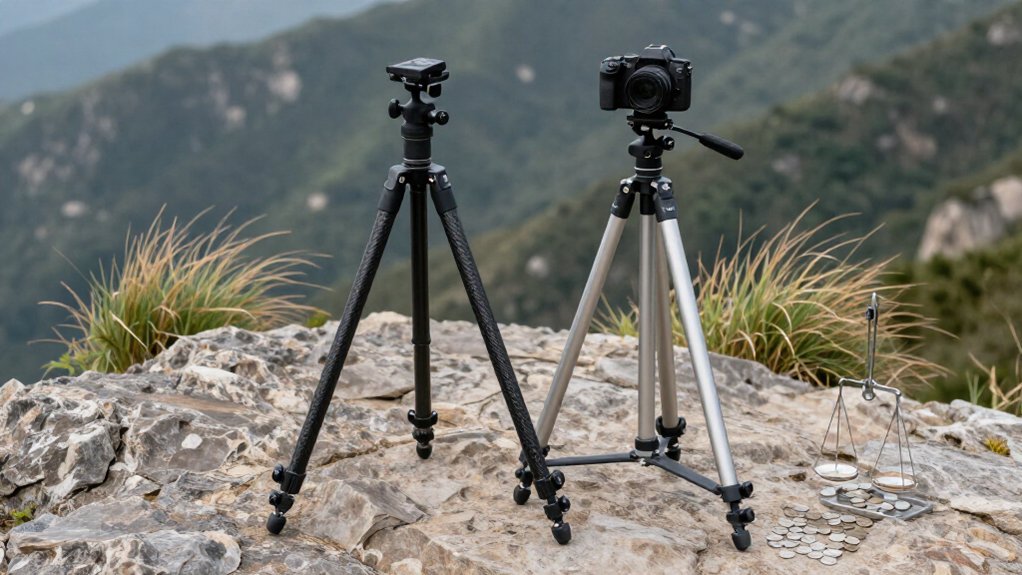
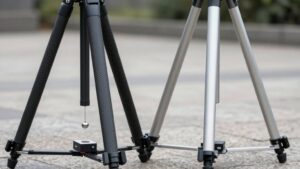
A carbon-fiber tripod typically saves you about 1–1.5 pounds versus a comparable aluminum model, while damping vibration faster to help protect sharpness in wind and long exposures.
Aluminum often costs 30–50% less, and its added mass can resist small movements, though it feels colder in winter.
Compare rated payload with your camera, lens, and head combined, and stay below capacity.
Your choice depends on travel, conditions, and budget; the sections ahead explain how construction and setup affect performance.
Wind Resistance and Vibration Control
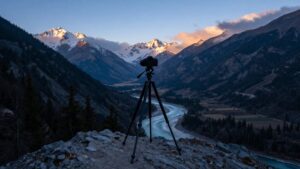
Wind exposes a key difference between carbon fiber and aluminum tripods: carbon fiber damps vibration faster, so your camera settles sooner after a gust or bump. With long-exposure shots or a high-resolution sensor, that shorter settling time can reduce blur. Aluminum transmits more vibration, so small gusts or accidental bumps may create detectable camera shake. When you compose outdoors across temperature changes, carbon fiber’s low thermal conductivity can make the tripod easier to grasp without adding movement.
| Condition | Carbon fiber | Aluminum |
|---|---|---|
| Wind or bump | Faster settling | More transmitted shake |
| Long exposure | Lower blur risk | Greater blur risk |
If you prioritize shake control, carbon fiber’s typically the practical choice when vibration settling time matters most; aluminum remains more susceptible to motion under the same conditions.
Tube Construction Differences
Although both materials form hollow leg sections, manufacturers build them differently: carbon-fiber tubes use layered woven fibers bonded with epoxy and cured under controlled conditions, while aluminum tubes are typically extruded from alloys such as 6061 or 7075, then machined.
Each carbon layer’s fiber orientation can target stiffness and strength, but precise layup and inspection help you identify voids or delamination. Aluminum avoids a bonded resin structure; its mature extrusion process supports consistent dimensions in high-volume production.
For comparable rigidity, carbon tubes can use thinner walls, whereas aluminum often needs thicker sections and heavier geometry. You’ll get distinct structural designs. Manufacturers control composite curing and quality more closely, while machining finishes formed alloy sections. Those choices shape manufacturing demands and the finished tube.
Cold-Weather Handling
Tube construction also affects comfort and upkeep in winter. Aluminum tripod tubes, including 6061 and 7075 alloys, can feel cold when you grip them, while carbon fiber’s lower thermal conductivity usually makes contact more comfortable. You may find carbon fiber easier to handle during extended winter shoots because it transfers less heat from your hands, reducing cold-related discomfort as you adjust the tripod.
Moisture resistance also differs. Carbon fiber naturally resists corrosion, which suits damp, icy, or coastal locations. Aluminum can corrode when moisture reaches exposed surfaces, particularly in saltwater environments, so you’ll need to dry and inspect it more carefully after wet shoots.
In cold, windy conditions, carbon fiber can settle vibrations faster after movement, helping you preserve sharpness during long exposures when bulky clothing makes repositioning slower. Neither material eliminates the need for careful handling.
Leg Locks and Setup Time
When setup speed matters, aluminum tripods often benefit from simple, mature leg locks that operate quickly, while carbon fiber models may use more precision-tuned components that need consistent tightening for repeatable stability.
That difference doesn’t guarantee faster setup with either material; lock design and your adjustment habits matter more. Carbon fiber legs weigh less, so you can unfold and reposition them with less effort. For example, the NEEWER LiteTrip LT38 weighs 2.4 lb.
Still, seat every section fully in its lock before loading the tripod. Carbon fiber’s stiffness-to-weight advantage can help preserve rigidity at full height, reducing re-leveling. With either type, test the locked legs with a brief shake and confirm the center column or height is secure. This check can prevent delays from correcting a loose section.
Quick-Release Plate Standards
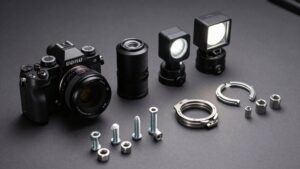
Quick-release plate standards determine which tripod heads and clamps you can use, regardless of whether the legs are carbon fiber or aluminum. The most common options are Arca-Swiss-style dovetails and Manfrotto 501-style flat, locking plates. Your choice limits compatible heads and clamps, so verify the standard on both the head and camera plate before buying; switching usually requires another plate or an adapter.
Check dovetail dimensions and geometry, not just the label. An Arca-Swiss profile won’t seat correctly in a flat-plate clamp, and mismatches can cause poor clamping or shifting. Clamp design matters: screw knobs, levers, and single or dual locks hold plates differently under load. The leg material doesn’t change compatibility, but with heavier setups, tighten to reduce slippage. Compare fit and locking security.
Cleaning Leg Threads
After choosing a compatible head and plate, keep the leg threads clean so grit doesn’t cause binding or wear.
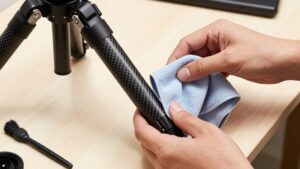
Start by removing grit with a dry brush or compressed air; this keeps abrasive particles from grinding deeper into the threads. Wipe them with a lint-free cloth dampened with isopropyl alcohol to dissolve road film and old lubricant residue without leaving moisture. Dry everything completely before reassembly.
Trapped moisture can promote corrosion on aluminum threads, especially in coastal or salty air, while carbon fiber hardware may feel gritty. If roughness remains, use a non-metallic soft pick to lift debris from thread crests and valleys, then re-clean and dry. Avoid steel tools; they can scratch surfaces and worsen wear. Apply a small amount of lubricant, often light silicone grease. It helps aluminum threads resist binding and prevents galling in carbon fiber tube sections. Cycle the legs several times to distribute it evenly.
Repairability After Leg Damage
If a tripod leg strikes a rock or edge, aluminum is usually easier to keep in service: it tends to dent or bend rather than crack, and replacement parts are generally easier to find. After a leg hit, you may find a dented aluminum tube remains usable, but inspect it and replace it if deformation affects locking or sliding. Carbon fiber can fracture or delaminate after sharp impact; visible damage may conceal fiber shifts or separation, so you shouldn’t assume a compromised leg is safe.
Carbon legs often need professional inspection or full replacement, and parts can be harder to source. That service burden may make your post-damage bill higher than aluminum’s, despite carbon’s higher initial cost; aluminum parts are generally easier to obtain.
Load Capacity and Payload Limits
A tripod’s rated load capacity applies to your camera, lens, head, and accessories combined, so keep the total below the limit. Carbon fiber models can offer high capacity at low weight, but don’t assume the rating reflects stability at full extension or in wind.
Leave a safety margin, especially for long exposures, and compare ratings against your gear and shooting height.
Rated Load Capacity
Rated load capacity is the manufacturer’s maximum payload for the tripod system, often including its head, and should be treated as a hard limit, not a comfortable working target.
For example, the NEEWER LiteTrip LT38 carbon fiber tripod carries a rated load of about 22 lb (10 kg). That figure describes the system’s stated upper payload; it doesn’t mean every configuration feels equally rigid.
When you compare carbon fiber and aluminum models, check their ratings rather than assuming one material supports more. At a matched rating, carbon fiber commonly delivers comparable stiffness with less tripod mass, making the same payload easier to carry. To check compatibility, add your camera, lens, head, and accessories, then compare their combined weight with the manufacturer’s capacity. Include the head only if the specification excludes it. Ratings may use pounds or kilograms, so convert units before comparing products.
Payload Safety Margin
Although a tripod’s rated load capacity sets its stated limit, keeping your camera, lens, head, and accessories to about 50–75% of that rating leaves a practical safety margin.
- Include your camera body, lens, head, grip, and counterweights in the total payload.
- Compare that total with the tripod’s rating; many carbon travel models list about 22 lb.
- Keep the head rated at least as highly as the legs, so it won’t become the weak point.
- Near-limit loads increase leg and hinge strain and can prolong vibration settling, especially with telephotos.
In wind or at full extension, gusts add dynamic forces, so choose a lower effective load than the label permits.
Carbon and aluminum both benefit from this margin; compare rigidity and setup conditions, not material alone.
Studio vs. Trail Photography
For studio work, you may favor aluminum’s added mass for resistance to micro-movements, despite its slower vibration damping. On trails, carbon fiber can save about 1–1.5 lb and damp vibrations faster, but typically costs 30–50% more.
Choose based on where you shoot: aluminum often offers better studio value, while carbon fiber suits weight-sensitive hikes.
Studio Stability
In a controlled studio, aluminum’s extra mass can resist cable tugs and nearby vibrations, while carbon fiber’s lighter weight offers little advantage unless you need to move the tripod often. In practice, judge studio stability by how the whole support system behaves:
- Aluminum adds inertia against small disturbances, and tall, extended legs feel less tippy as you adjust framing.
- Carbon fiber damps vibration faster, helping you preserve sharpness in long exposures and high-resolution studio work.
- Comparable carbon fiber models often cost 30–50% more, so aluminum may offer stronger value when portability and corrosion resistance matter less.
- Check the head and center column: these often influence stability more than leg material, especially under demanding loads during repeated framing and adjustment in your studio.
Trail Weight
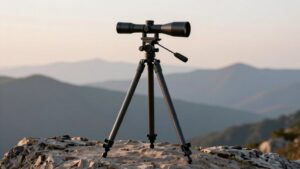
On multi-mile hikes, a carbon-fiber tripod can save 1–1.5 lb compared with a comparable aluminum model, making repeated carries less taxing. That reduction matters when you shoulder your kit for hours, though it doesn’t make the tripod weightless.
In studio work, you don’t carry gear between setups, so aluminum’s extra mass can improve static stability without imposing a transport penalty. On trails, lighter carbon fiber reduces fatigue, while aluminum’s mass can resist small movements caused by a bumped leg or cable tug.
Carbon fiber also damps vibration faster, helping long exposures settle in wind. You’ll typically pay more for that reduced carry weight: aluminum models often cost 30–50% less. Aluminum’s ductility can also make accidental knocks less likely to cause catastrophic failure in practice.
Location-Based Choices
Where you shoot should guide your tripod choice: aluminum’s added mass and lower price suit studio and event work, while carbon fiber’s lighter build and faster vibration damping favor long hikes and outdoor exposures.
Match the material to your route, exposure duration, and handling risks.
- For studio sessions, aluminum’s mass resists small movements, and its lower cost protects your budget.
- For backcountry hikes, carbon fiber can save 1–1.5 pounds, reducing fatigue over distance.
- In wind or cold, carbon settles faster, helping your high-resolution camera retain sharpness.
- On rocky routes, aluminum dents rather than fractures, so impacts may leave it usable.
Carbon costs more upfront because composite construction needs curing and inspection; choose it for carried weight and exposure demands, not as a premium upgrade.
Long-Term Value by Material
Although aluminum tripods usually cost 30–50% less upfront, carbon fiber can offer better long-term value if you travel or backpack frequently: comparable setups often save about 1–1.5 lb, reducing fatigue over years of use. Carbon also settles vibrations faster than aluminum, helping you produce sharper long exposures on high-resolution sensors during outdoor shoots. That advantage matters when you use the tripod often.
However, if you handle gear roughly, aluminum may deliver greater value: its ductile legs tend to bend rather than break, and dents may remain functional. Point impacts can damage carbon beyond practical repair, while aluminum parts are generally easier to repair or replace. Carbon resists moisture and salt naturally, reducing coastal corrosion concerns. Aluminum may need more maintenance there. Your lower purchase cost with aluminum may outweigh carbon’s weight and corrosion benefits if impacts, transport abuse, or inexpensive replacement parts dominate ownership over the years.
Conclusion
Your choice depends on where you shoot and what you carry. Carbon fiber usually cuts weight and reduces vibration, but it costs more and may be harder to repair. Aluminum offers lower prices and simpler repairs, yet it adds weight and can feel harsher in cold weather.
Compare tube construction, locks, plates, and payload ratings, not material alone. For trail work, prioritize portability; in a studio, favor dependable support. Check parts availability before buying, then match the tripod to your camera and long-term budget.
Tripod Price Estimator: What Should You Pay?
See the typical price range for camera, phone, travel, video, mini tripods and monopods from a dated Amazon shelf snapshot, and check your budget.
Mini Tripod Weight-Fit Checker
Add up your camera body, lens and accessory weights and see which mini tripods in our data list a capacity that covers your setup.