Is a Fluid Head Necessary for Good Video? When You Can Skip It
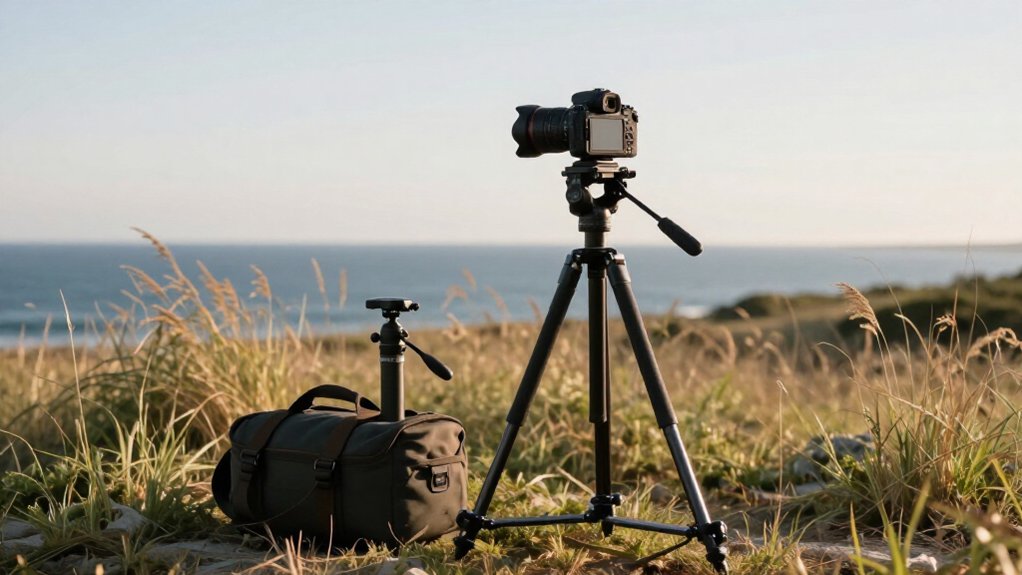
You don’t need a fluid head for locked-off video; sturdy tripod legs, careful leveling, and a stable setup matter more.
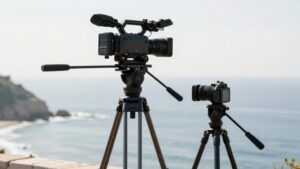
But if you pan or tilt, fluid damping resists abrupt starts and stops, helping you avoid sticky jumps and visible steps.
Match drag and counterbalance to your camera’s weight, especially with long lenses.
A fluid head won’t fix poor technique or walking shake.
Choose a head by considering how you shoot and what your rig needs.
For Smooth Panning
A fluid head makes smooth panning easier by using viscous-fluid cartridges to damp sudden movement and prevent the sticky, jumpy starts common with cheap heads. You’ll get the best results when you level the tripod legs first; damping can’t correct an unstable, tilted base.
Adjust the head’s drag and counterbalance to match your camera’s weight, then pan with steady pressure. Tune drag for continuous, controlled motion. With a long lens or heavier setup, controlled torque can limit wobble.
For simple, slow sweeps in one direction with little reframing, you may not need a fluid head. A well-adjusted pan/tilt head can work if you set appropriate drag and use a consistent, slower hand technique. Choose a fluid head when repeatable, controlled pans matter under load.
Static vs. Moving Shots
For mostly static video, you can skip a fluid head: stability depends more on sturdy tripod legs, careful center-column use, and proper leveling than on damping. When you lock the camera off, spend your effort tightening the leg locks, keeping the center column low, and leveling the support before recording.
A fluid head’s drag and counterbalance matter most when you move the camera. Hydraulic cartridges resist abrupt starts and stops, helping you avoid a snap at the beginning or end of a pan or tilt. For a slow, continuous move, that damping gives you a more consistent feel than friction or a ball head can provide.
Heavier setups also benefit when you track within the head’s rated range. But technique still matters: quick moves or constant reframing can look unstable, even with a fluid head. Match the head to your shot, not simply to your camera’s weight and planned camera movement.
Long-Lens Micro-Jitters
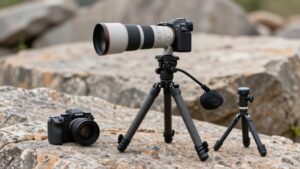
Long lenses magnify tiny movements, so even a slight pan or tilt correction can show up as jitter. When your tripod head sticks, it resists the handle, then releases in a jump. A fluid head’s hydraulic drag smooths continuous motion, preventing small corrections from snapping your camera and lens into visible steps. If payload approaches a ball head’s limit, uneven friction can cause backlash and settling; counterbalance and tension reduce rocking while tracking.
| Cause | What you’ll see | Practical response |
|---|---|---|
| Sticking head | Hesitation, then jump | Add fluid damping |
| Loose setup | High-frequency shake | Level and stiffen tripod |
| Locked framing | Stable static shot | Skip fluid head |
For slow pans, use smooth damping; for locked shots, solid leveling and stiffness may suffice. Review zoomed footage for motion.
Head Types for Video Shooting
Your head choice determines how smoothly you can pan and tilt: fluid video heads use hydraulic damping, while ball and three-way heads rely on friction and locks. Gimbal heads suit balanced, long-lens tracking, but they’re less convenient for quick reframing.
If you mostly shoot handheld or locked off, you may not need a fluid head; upgrade when you want repeatable camera moves.
Fluid Video Heads
When smooth, controlled motion matters, a fluid video head uses a hydraulic cartridge to damp sudden pan and tilt movements. That damping gives you smoother continuous motion than typical friction-based photo heads, especially when you’re filming close-ups or macro subjects. You can make small, precise adjustments while keeping your framing level.
Many models let you adjust drag and counterbalance, so you can match resistance to your camera and lens. Proper setup helps the camera move smoothly, stay stable during tracking, and support slow reframing. That’s valuable with long lenses, where slight movement can disrupt the shot.
Check the head’s payload rating before mounting your rig; for example, the Manfrotto MVH-500AH supports five kilograms. Choose a fluid head when your footage needs deliberate, repeatable motion.
Ball Heads
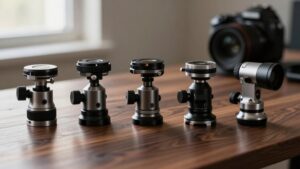
Ball heads can handle mostly static video shots and quick reframing, but their lock-and-go design lacks the continuous damping of a fluid head. You’ll notice the difference when panning or tilting: friction alone can feel sticky or uneven during framing adjustments, especially while walking or near the head’s load limit.
If you use one, set tension and treat movement like a slide. Make slow, deliberate adjustments; releasing the lock suddenly can snap the frame and introduce shake. Keep your camera’s center of gravity controlled with a long lens, since a loosened ball can let the rig creep or dip.
For locked shots and quick reframes, a ball head may suffice. Use a fluid head for smooth, repeatable tracking or pans and tilts on longer takes.
Three-Way Heads
Three-way heads offer separate pan and tilt controls, but their stiffer, less consistent resistance can make smooth video moves harder than with a fluid head. You can use one for static talking-head scenes, locked-off pans, or short movements. Keep each move slow, and avoid quick snap starts and stops; they can make the tripod feel jumpy.
Because friction or gear resistance lacks continuous damping, small corrections may produce micro-wobbles or visible stepping during pans and tilts. That stickiness becomes especially obvious in walking-style shots, where you make frequent framing adjustments.
For longer, flowing moves or smoother tracking, a fluid head generally gives you cleaner motion.
If you use a three-way head, level the tripod carefully, tighten its knobs smoothly, and balance your camera load.
Gimbal Heads
For tracking action, a gimbal head uses camera balance, not fluid drag, to let you pan and tilt smoothly with little effort. A gimbal can feel like the classic video choice when you follow moving subjects, especially with long telephoto lenses. Its motion comes from a balanced center of gravity, not hydraulic cartridges, so you won’t fight friction during controlled pans and tilts.
To get that response, trim your camera to neutral, usually by sliding the plate until it stays put when you release it. If balance is off, the rig may drift, feel jerky, or demand constant correction. Setup also takes time: L-bracket orientation and mounting constraints can slow quick reframing. With long lenses, a gimbal tracks well; fluid drag is often quicker to adjust.
Run-and-Gun Rig Priorities
For run-and-gun work, keep your camera lightweight and controls within quick reach so you can react without delaying a shot. Use reliable image stabilization to reduce handheld shake, but don’t expect it to replace steady technique.
Minimize setup time so you can capture moments before they pass.
Lightweight Camera Setup
Keeping a run-and-gun rig light can matter more than adding a fluid head. For vlogging, a compact camera and minimal accessories reduce inertia, so handheld and mini-tripod movements stay manageable. A fluid head’s drag mainly helps when you need smooth pans or tilts over time; it won’t correct jolts from walking.
Improve your stance, grip, and start-stop technique before paying for drag you may not use.
If you mount the camera, avoid cheap photo heads whose stiff controls make movement start and snap. Choose a simple pan/tilt head that moves smoothly; it’ll handle short takes. Prioritize stable legs and a leveling base, then reframe slowly and deliberately. Uneven leveling can spoil pans and tilts.
Reserve a fluid head for long continuous moves with consistent motion.
Fast Access Controls
When you’re moving quickly, prioritize a head with reachable pan and tilt drag controls so you can set motion without rebalancing mid-take. Check that you can reach each dial while wearing gloves or supporting a long lens; controls you can’t operate quickly undermine a run-and-gun setup. Use counterbalance when available to shift from tilt-down to tilt-up with little effort.
For handheld-to-tripod transfer, choose a quick-release plate that lets you mount or remove the camera and repeat your framing. If you mostly lock and shoot, you can skip a fluid head, but demand positive, repeatable locks; a slightly top-heavy camera can creep if the lock slips. Avoid heads that need lengthy re-truing, especially with heavy telephoto setups; some ball heads become finicky.
Reliable Image Stabilization
In a run-and-gun setup, reliable in-camera stabilization and steady technique can reduce handheld shake enough to make a fluid head optional. Hold the camera firmly, control each start and stop, and minimize reframing; stabilization can’t correct erratic movement or poor leveling.
If you avoid intentional pans and tilts, you may not need the hydraulic damping that helps a fluid head resist sudden motion.
When you do use support, don’t assume any tripod will improve your footage. A cheap head can introduce sticky, uneven movement because it lacks adequate damping. Level the camera first, then move it consistently to limit visible micro-wobbles.
For planned motion, choose a properly functioning head with continuous, damped movement, or use a well-balanced gimbal or task-appropriate ball head. Match support to your shots, not to a default rig checklist.
Minimal Setup Time
For run-and-gun work, prioritize a stable tripod or monopod base: lock the legs, level the camera, and stay within the head’s payload rating. Even a fluid head won’t correct support wobble, so secure your base before optimizing movement.
When you need to reframe quickly, use short, deliberate pans or tilts, then reposition your body; don’t force continuous motion through a cheap friction head. Choose a head that’s quick to adjust and reliable under your camera’s load. Tiny entry-level photo heads can stick during pan or tilt, producing jumpy starts that cost time and ruin takes.
For smoother moves without fluid-head weight or cost, increase available drag or tension slightly and move slowly to limit start-stop snap. Upgrade when continuous tracking or smooth reframing matters.
Payload and Plate Standards
A fluid head matters most when your camera setup approaches the head’s payload limit, so check the rating rather than relying on its compact size: the Manfrotto MVH-500AH weighs under 1 kg but supports up to 5 kg.
Match the quick-release plate to the head’s clamp; an incompatible standard may force an adapter, adding play. For example, you can pair the MVH-500AH with an Arca-Swiss-compatible bridge such as Kirk Enterprises’ MVH500-BQRV2.
Use a rigid, properly sized clamp to prevent visible micro-movement. Check compatibility with L-brackets and specialty brackets, too: changing orientation shifts the load around the pivot and can alter balance and handling.
If your rig sits below capacity, simpler support may suffice; leg or mounting slop, not damping, may limit stability.
Replacement Parts Availability
Beyond payload and plate compatibility, check whether you can get replacement parts for the head. Inspect the manufacturer’s parts list and service documentation before buying. Confirm that pan/tilt cartridges, counterbalance springs, leveling bubbles, plate locks or bearings, and handle end caps remain available or can be serviced.
These wear items determine whether you can keep a head operating after years of use.
Prefer models supported by broad service networks and accessory ecosystems. For example, the Manfrotto MVH-500AH has bridge-plate options, including the MVH500-BQRV2 for Arca-style plates. Check that you can source mounting adapters or 90-degree clamp-rotation parts for your camera interface.
Local availability may matter more than a payload rating.
If the maker doesn’t document spares for your model, a component failure could force you to replace the head. Treat parts access as an ownership cost, not an afterthought.
Counterbalance Range Mismatches
Even when a fluid head pans smoothly, counterbalance mismatch can make tilts harder to control. Your camera and lens must fall within the head’s rated payload range; a 5 kg head may struggle outside that envelope.
- If your center of gravity sits too far forward or back, the head may not hold an angle. You’ll see slow creep or constantly fight the tilt.
- A tall lens or top-heavy rig, such as bellows or macro rails, can shift balance. Reposition the plate or mount from the lens side to restore the usable range.
- Poor balance can trigger micro-movements and extra wobble during starts, tracking, or tilt reversals because the system isn’t neutral.
Choose a head whose counterbalance suits your complete rig, not just its body.
Temperature-Dependent Drag Consistency
Because a fluid head’s damping fluid changes viscosity with temperature, its drag may feel heavier in cold conditions and lighter in warm ones. In cold air, thicker fluid raises pan-and-tilt resistance, so you need more effort for tiny moves. Warmth can lower drag, making your corrections easier to overshoot. Since drag damps torque rather than locking the camera, these shifts can affect how steadily you hold an angle during a take.
- Let the head acclimate when you move between warm interiors and cold locations.
- Then set drag to match the conditions you’ll actually shoot in.
- Recheck tension after temperature changes, especially for slow pans, tilts, and tracking.
If you skip this check, your tuned movement may not remain consistent across takes or locations either.
Conclusion
You don’t need a fluid head for every video. If you’re shooting locked-off frames, a photo head or tripod may do the job. But when you pan, use long lenses, or work with changing loads, choose a video head whose drag stays smooth across temperatures and whose counterbalance matches your camera.
Check payload, plate compatibility, and parts support before buying. Prioritize portability only after stability and control. That way, you’ll get deliberate motion without overspending.