How to Choose a Tripod Head: Ball, Pan-Tilt, Fluid, Geared or Gimbal?
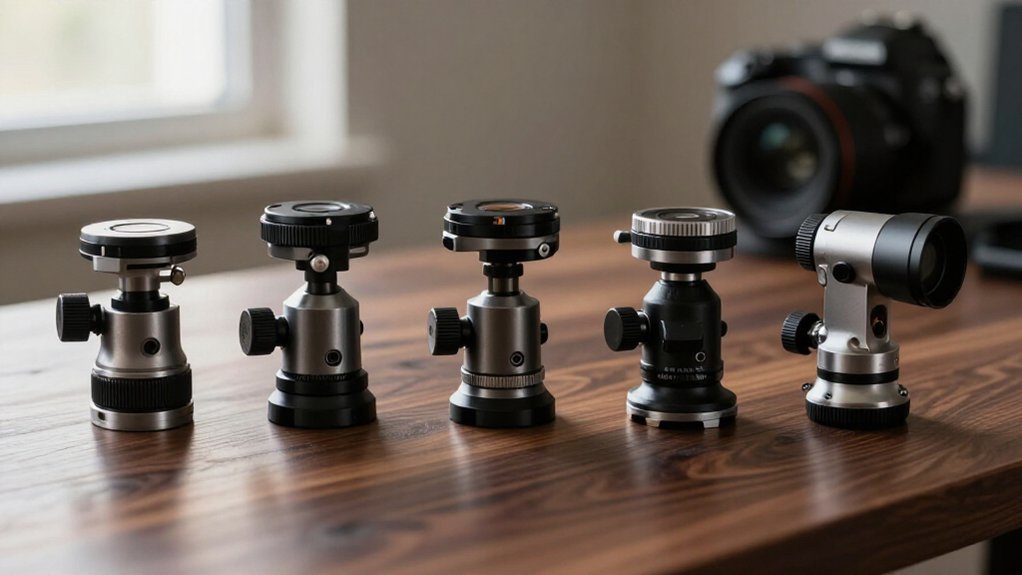
Choose a ball head for fast reframing.
Choose pan-tilt for independent axis control.
Choose fluid for video pans and tilts.
Choose geared for precise micro-adjustments.
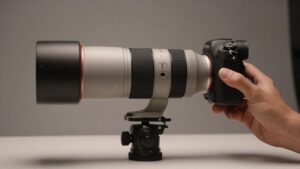
Choose a gimbal for balanced telephoto tracking.
Match the head to your subjects, locks, and heaviest camera-lens setup.
Include grips and accessories in its weight, then choose a rated capacity at least 1.5 times higher for dynamic loads.
Check tripod capacity, mounting fit, warranty, and parts availability.
More detail clarifies the trade-offs.
Quick Picks by Photography Style
The best tripod head depends on how you shoot: use a gimbal for balanced tracking with heavy telephoto lenses, or a fluid head with adjustable drag for smooth video pans and tilts. For long lenses, a gimbal balances the load, so you can track without resisting the lens’s weight. A fluid head lets you tune drag to reduce jerks during pans and tilts.
If you need axis control, choose a pan-and-tilt head to keep horizons straight while reframing. A ball head speeds repositioning: loosen one knob, adjust, then tighten. For precise, separate pan, tilt, and roll adjustments, use a three-way head.
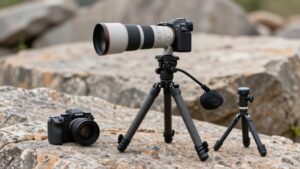
When you travel with a lighter kit, a ball head can reduce weight and time; check its load rating against your heaviest lens combination.
Shooting Style and Subjects
Match the head to the movement and precision your subject requires. For birds in flight or sports action, a gimbal head balances a telephoto lens and supports smooth tracking, even with a 600mm or 800mm setup. For landscapes and architecture, a pan-and-tilt head lets you make deliberate angle changes and keep horizons aligned while recomposing.
If you photograph varied subjects and need repositioning, a ball head moves in multiple directions from one control, helping you update framing rapidly. For video-style pans and tilts, choose a fluid head; its drag and damping reduce jerky starts and stops.
When product placement or fine-grain composition demands ultra-precise micro-adjustments, a geared head gives you movement through gear-based controls. Let subject motion, framing speed, and precision guide your choice.
Locking Mechanism Preferences
Once you’ve matched the head to your subject, consider how its locks hold your camera under load. Prefer a strong, easy-to-engage knob and capacity at least 1.5× your full setup weight; this headroom helps prevent slip.
| Head type | Locking preference | Practical effect |
|---|---|---|
| Ball / pan-tilt | One knob / separate axis locks | Re-secure all angles / isolate pan or tilt |
| Fluid / geared | Lock plus drag controls / precise locks | Reduce jerky repositioning / hold framing |
| Gimbal | Balance at lens center of gravity, then lock pan/tilt | Hold heavy setup without fighting center-of-mass shift |
For fast reframing, choose a ball head; for independent axis changes, choose pan-tilt. Fluid heads pair locks with damping for smoother video-like repositioning. With long lenses, balance a gimbal at the lens’s center of gravity before locking pan and tilt.
Test the knob with your actual camera and lens combination, not the body alone. Check engagement feels positive and capacity exceeds your complete rig weight under load.
Head Movement and Control
You control tilt, pan, and roll, but the head type determines whether you adjust these axes together or independently. Compare how each design handles friction and resistance, which affect movement smoothness and precision.
Also assess how quickly you can lock the head and reposition your camera.
Axes Of Movement
A tripod head controls three camera axes: pan, or horizontal rotation; tilt, or vertical angle; and roll, or rotation around the lens axis. These directions let you adjust framing without shifting the tripod legs. A ball head’s socket releases the camera to move through several directions before you lock it in place.
Pan-tilt heads guide framing through horizontal and vertical movement.
Fluid heads add drag, helping you maintain steady pans and tilts, while geared heads use fine mechanical adjustments for measured positioning. A gimbal supports balanced movement around a lens’s center of gravity, making smooth pans and tilts easier with heavy telephoto lenses. You’ll often rotate a lens in its collar to correct roll.
Consider which movements your subject and composition demand: tracking action calls for smooth travel, while static scenes may benefit from deliberate, controlled repositioning. You can choose based on load, pace, and desired precision.
Independent Axis Control
When you need to reframe without disturbing the camera’s other movements, independent axis control lets you lock or release pan, tilt, and sometimes roll separately. A three-way pan-tilt head gives you separate pan and tilt locks, so you can adjust horizontal framing while preserving elevation, or change elevation without shifting the view sideways. A ball head couples these movements more closely: its main control typically releases several directions together, limiting selective adjustment.
A fluid head separates pan and tilt damping, allowing each axis to respond and stop according to its own setting. For long-telephoto wildlife work, a gimbal supports deliberate pan-and-tilt tracking; you usually manage roll at the lens collar. Choose based on whether you need to isolate a framing change or coordinate movement across axes. Independent controls reduce unintended shifts during composition and tracking, without requiring a full reset of your camera position between successive adjustments in practice.
Friction And Resistance
Friction determines how easily a tripod head moves after you loosen its lock: too little resistance lets the camera drift, while too much makes small adjustments difficult.
Fluid heads use hydraulic damping to provide consistent drag during pans and tilts, helping you avoid jerky starts and stops and repeat smooth motion. On a three-way head, adjustable friction can tune pan and tilt resistance independently instead of relying on one shared setting.
Geared heads create resistance through precision gear meshes rather than ball movement or gravity, giving you steady, measurable control in small increments. A gimbal feels nearly weightless to track when you balance the camera’s center of gravity near the lens mount. If you don’t balance it correctly, uneven drift makes tracking feel resistant and unstable.
Locking And Repositioning
Locking and repositioning determine how you re-aim a camera without shifting settings you want to keep. A ball head releases with one knob, letting you change pan, tilt, and roll together; tighten it to secure the new composition. A three-way head gives you separate axis locks, so you can adjust pan without disturbing tilt, or vice versa.
Fluid heads add independent pan and tilt drag, helping you release and re-aim smoothly rather than jerking into the next frame. Geared heads let you make repeatable micro-adjustments through precision gear increments, useful when fine framing must remain controlled. With a gimbal, balance your long lens first, then open the pan and tilt axes to track a subject while preserving stability. Choose the mechanism that matches how independently and precisely you need to reposition.
Load Capacity and Safety Margin
Calculate the required load from your complete setup, including the camera, heaviest lens, grip, and accessories. Check the head’s rated capacity, but account for rating reliability and choose at least 1.5 times your system weight.
Leave this margin for dynamic loads during repositioning, and verify that the tripod’s capacity and mounting thread also match your setup.
Calculate Total Gear Weight
To size a tripod head, add the camera body, heaviest lens, battery grip, and any microphone or monitor, then choose a head rated for at least 1.5 times that total. Weigh each component in its shooting configuration, including attached accessories; use the heaviest lens you expect to mount.
Add these figures to get the working load. For example, a 10-pound setup requires a head rated for at least 15 pounds. That margin accounts for ratings that may mark where smooth operation starts to fail, not a comfortable working load. Long lenses create added torque, which can increase slipping risk beyond what weight alone indicates.
For heavy rigs, check the tripod’s limit too; the lower-rated component constrains the system. Use consistent units when weighing each component.
Check Rated Capacity
Check the head’s rated capacity against the total weight it must support: your camera body, heaviest lens, and any grip, microphone, or monitor mounted on the head. Choose a head rated for at least 1.5 times that combined weight; this load level helps preserve smooth operation.
Treat ratings from low-cost heads cautiously, because some manufacturers overstate capacity. Established brands often publish more conservative figures.
A rating may mark the point at which performance becomes unreliable, with locks slipping or pan and tilt movements turning sticky. For cinema or large-format equipment, you may need a specialized head rated for 15 pounds or more. Check the tripod’s maximum capacity as well as the head’s rating, and verify that the mounting thread or adapter, including any 3/8-16 connection, can support the setup.
Allow a Safety Margin
Choose a tripod head rated for at least 1.5 times the combined weight of your camera, heaviest lens, grip, and mounted accessories.
A head’s published limit often marks where smooth operation stops, not a comfortable working target. Keep your setup below that ceiling to reduce sluggish locks or drift under gear weight. Because inexpensive heads may overstate capacity, favor reputable manufacturers with conservative ratings and verify performance.
For cinema or large-format systems, consider a 15-plus-pound-class head, then check the tripod’s maximum load against your setup. Head capacity alone won’t protect an undersized support. Confirm the mounting interface, including thread standards such as 3/8-16, and observe the tripod’s mounting limits.
At this margin, you’ll preserve operation and reduce chance of binding near the rated limit.
Consider Dynamic Loads
When your camera moves or encounters wind, dynamic forces can challenge a tripod head beyond the static weight of your setup.
Calculate total load by adding your camera, heaviest lens and hood, battery grip, and every accessory. Choose a head rated for at least 1.5 times that figure; this reserve limits slip and supports smooth operation.
Treat ratings cautiously: inexpensive heads may overstate capacity, while reputable brands may rate conservatively. A rating can mark when damping or locking starts to fail, not when the head simply fails.
For wind, tracking, or rapid repositioning, extra capacity helps maintain predictable control. Also check the tripod legs’ maximum load and mounting thread, commonly 3/8-16; either can limit safe use even when the head qualifies. Heavy cinema or large-format rigs need specialized heads rated 15+ pounds for dependable dynamic control.
Mounting Plate and Thread Standards
Before buying a tripod head, confirm that its mounting thread matches your legs: most photo systems use 3/8″-16, but some use a different standard. Then verify the head’s interface, including its bolt or stud connection; a stated load capacity may assume a particular head type, so mechanical fit alone doesn’t establish safe compatibility.
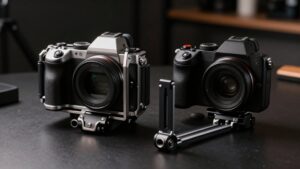
If you use a quick-release plate, match its standard—such as Arca-Swiss or a proprietary Manfrotto-style wide plate—to the head. Some fluid heads and long-lens setups need an adapter for Arca plates. For gimbal or two-way heads, check whether your lens foot accepts the plate’s dovetail; balance may depend on that interface, not just the head-to-tripod thread.
A ≥1.5× capacity match helps preserve stability. Match capacity to hardware and load.
Warranty and Parts Availability
Because long telephotos put substantial wear on a head, check the manufacturer’s warranty and track record for support, not just the product’s rated capacity.
For a wildlife setup, repeated loading and adjustment can expose weak service policies. Review coverage terms, exclusions, claim process, and repair turnaround before buying; a long warranty matters less if the maker can’t supply service or parts.
Check stock of replacement plates, locking knobs, screws, and center posts, and ask whether the manufacturer still supports older models. A standardized plate system can preserve options for replacements and accessories, but verify that the head remains supported.
If you’ll use a 600mm or 800mm lens, favor a head rated with 1.5× your total load; capacity headroom limits stress but doesn’t replace warranty coverage.
Clamp Compatibility Issues
Check a head’s clamp standard before comparing load ratings: many fluid heads and some Manfrotto models use proprietary plates rather than Arca-Swiss dovetails. You should confirm compatibility with your exact plate type before purchase.
- Identify the plate footprint.
- Confirm clamp and screw fit.
- Check lens-foot dovetail alignment.
A documented match avoids unexpected plate replacement. An adapter can bridge standards, but may add height or create a less secure, awkward connection.
For wildlife telephotos, verify the lens-foot dovetail: clamp mismatch can prevent sliding the rig to its center of gravity, even when capacity is adequate. For heavy setups, compare rated capacity with total weight; a rating around 1.5 times that weight is a useful target, not a substitute for correct mounting in actual use.
Tripod Head Maintenance Needs
Keep the head’s joints and locking surfaces free of grit, which can make movement uneven after dusty or windy shoots.
Use these checks routinely:
- After exposure, wipe joints and locks with a clean, dry cloth. On geared heads, dry-wipe the rack and gears so fine adjustments don’t feel gritty or skip teeth.
- Close ball-head knobs and pan-tilt locks firmly, but don’t overtighten them. Excess force can deform seals and impair smooth operation. On fluid heads, check drag consistency and inspect the cartridge area for leaks; lost damping can cause jerky pans or tilts.
- Store every head dry with the camera removed, especially gimbals. This reduces corrosion at pivots, center screws, and quick-release contact points. If movement remains uneven, consult the manufacturer before disassembly to avoid damaging internal parts.
Conclusion
Choose a head by matching its movement, locking system, capacity, and plate standard to the way you shoot. A ball head keeps travel light; a pan-tilt or geared head gives finer framing; a fluid head smooths video moves; and a gimbal balances long lenses.
Check clamp compatibility, leave a safety margin above your gear’s weight, and confirm parts support. You’ll get dependable control when you maintain locks, bearings, and fasteners and inspect them before shoots.