Ball Head Weight Capacity Explained: Why the Rating Isn’t the Whole Story
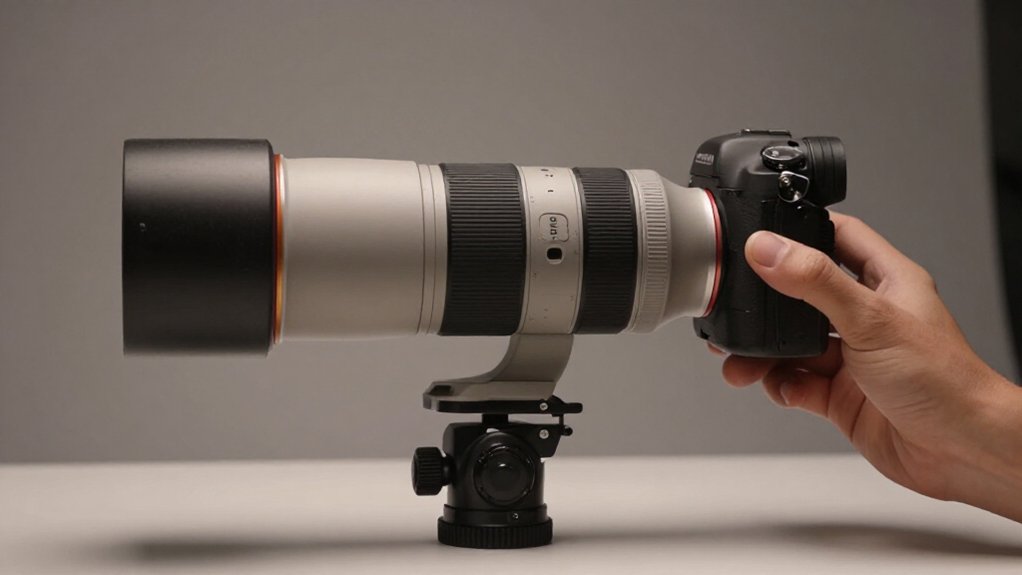
A ball head’s weight rating is a rough ceiling, not proof your camera-lens setup will stay still.
Manufacturers use different, often undisclosed static tests, so capacities aren’t directly comparable.
Your lens length, torque, clamp fit, and locking mechanics can matter as much as total weight.
Wind, vibration, and uneven ground can cause creep or framing shifts.
Check plate seating and locking behavior in your actual setup; checks ahead show what that number can and can’t tell you.
Why Ratings Mislead
A ball head’s stated weight capacity can’t be compared reliably across brands because there’s no industry testing standard, and manufacturers generally keep their test methods private.
When you see a rating, you can’t verify how the manufacturer measured it or whether another brand used the same procedure. Treat the figure as a limited reference, not proof that your equipment will stay fixed. A head with a stated capacity may still creep, vibrate, or resist precise adjustment if its stiffness, friction, or locking mechanics are inadequate.
Instead, assess how smoothly you can tune friction, whether the clamp securely fits your dovetail plate, and whether locking leaves the camera in position. Check for post-lock movement under intended working conditions; the printed number alone can’t establish stability.
Camera-Lens Load Combinations
Because lens length changes the leverage on a ball head, total weight alone can’t predict how well it’ll hold a camera-lens combination. Choose your heaviest compatible camera, lens, and accessories; include a grip, flash, monitor, or rails. Compare assemblies and test the orientations you’ll use.
A published rating won’t confirm that your specific setup stays put. This table helps you plan a practical check.
| Setup | Added load | Check |
|---|---|---|
| Body + short lens | Minimal | Lock hold |
| Grip + zoom | Moderate | Framing stability |
| Telephoto + flash | High | Creep after locking |
| Long lens, steep angle | Variable | Clamp and ball lock |
After mounting each combination, tighten the main lock and set fine tension or drag for its mass. Watch for slow creep or a shift after locking, then repeat with accessories attached. For telephoto work, verify that the camera-lens assembly locks firmly without movement; don’t rely on an “X lb” figure alone. Record the configuration that passes.
Torque and Leverage Effects
What makes one camera-lens setup harder to hold than another? Your camera-and-lens weight creates torque around the ball, and the distance from the ball’s support point to the setup’s center of mass sets the lever arm. With a long lens, that center often sits well forward, so even weight can produce a substantial bending moment.
That moment can make the head slip, creep, or vibrate unless friction resists torque from hand movement or wind.
Reframing also matters: a steeper tilt increases the weight component that tends to rotate the ball, challenging your lock and tension settings. Move an Arca plate forward or back, or add a rail or L-bracket, and you change the lever arm and the torque the head must counter, without measurably changing total weight.
Manufacturer Rating Test Methods
When you compare ball-head ratings, check whether the manufacturer discloses its static-load test conditions and safety margins.
Because methods and criteria vary, you can’t assume that matching ratings indicate consistent measurements or equal stability. Treat the listed capacity as a rough guide, not proof of secure real-world support.
Static Load Testing
A manufacturer’s load rating usually reflects a proprietary static test, not a standardized measure of real-world stiffness or slip resistance. In a check, the tester applies a vertical or near-vertical force and looks for permanent deformation, drift, or failure in the clamp and locking mechanism.
The rating may describe the weakest component tested, such as the ball’s bearing surface, locking knob, or plate interface. That makes ratings difficult to compare across heads and camera setups.
A friction clamp’s result depends on the plate interface; your plate’s material, thickness, and engagement may differ from the test fixture. Passing a static test doesn’t establish how your head behaves after locking. It may still creep, shift, or respond to stiction and tension under your load’s balance.
Testing Conditions
Because static load tests vary, a capacity number may not mean the same thing across brands. Manufacturers rarely disclose a standardized third-party method; brands use proprietary procedures.
The result depends on how you apply the load, where you place it on the head, and whether you’re testing a static hold or movement. A rating may also assume specific hardware, such as an Arca/RRS-style dovetail interface, rather than every setup you use. Tests may not capture slow creep after locking, knob slippage, or framing shift after lock; those depend on friction and the geometry of your load’s center of mass.
Treat the figure as a result under stated conditions, not a direct prediction of performance in use with your exact tripod, head, and camera configuration.
Safety Margins
Without a standardized test method, ball-head capacity ratings aren’t directly comparable across brands. Each manufacturer may use a different procedure, and many rely on proprietary tests that you can’t independently audit or reproduce. A published maximum load so doesn’t tell you exactly how the head was tested or how much reserve capacity the maker built into the rating.
Treat that figure as an approximate ceiling, not a working target. A head may survive a static test yet allow creep, slip, or adjustment shift under practical use. Those limits can matter before the head reaches its stated load.
Weigh your camera, heaviest lens, and accessories together, then choose a ball head with substantial capacity beyond that total. The added margin helps account for undisclosed test assumptions and real-world loads.
Measurement Consistency
Since no industry-wide standard governs ball-head capacity tests, manufacturers use proprietary methods and criteria that consumers can’t verify or compare directly.
Treat each maximum-load figure as a result of that brand’s test, not a common benchmark. Companies don’t disclose their procedures or acceptance thresholds, so you can’t confirm how they applied the load or decide whether two ratings use equivalent criteria. One maker may permit a different amount of drift, slip, or deformation than another before rejecting a test.
That difference can make capacities represent different thresholds. A load test may not specify how the head was configured, including friction or tension settings, or whether the test captured sudden repositioning or torque from a long telephoto lens. Read the rating as manufacturer-specific evidence, not a universal guarantee. When comparing products, prioritize disclosed test details; if none are available, treat the numbers as information.
Real-World Performance
Real-world performance depends on more than a ball head’s published capacity: there’s no industry standard for rating tests, and brands often keep their procedures proprietary. Because each maker can choose a different method, two ratings may not describe comparable performance.
A test may simply check whether a locked head slips under a static, controlled load. That result won’t tell you how steadily it frames a subject, responds to vibration, or holds position after you tighten the knob. At or below the stated capacity, mismatched friction tuning or internal tolerances can still cause creep, vibration, or post-lock shift.
Since you can’t inspect or compare proprietary procedures, treat the number as a rough upper bound, not a promise of stability. Test your setup before critical shooting.
Wind and Vibration Considerations
When wind or vibration moves a tripod, the key question isn’t only whether the ball head can hold the camera’s weight, but whether its friction, damping, and locks keep small motions from becoming visible frame drift.
Check whether the main lock and pan-base lock prevent post-lock shift under gusts; micro-slip can blur images or move the horizon. Near its practical limit, a head may creep when buffeted, extending settling time before your camera becomes still.
Added mass raises moment of inertia and can resist rapid vibration-driven movement, but only if the head remains firmly locked and friction holds. A raised center column increases wind-driven sway, so a capable head alone can’t guarantee sharp frames at the sensor. Use a short exposure when practical.
Uneven-Ground Stability Limits
On uneven ground, a ball head’s advertised load capacity may matter less than the tripod’s resistance to lateral torque and twisting. A high static rating won’t prevent small leg-height differences on a slope or soft surface from letting the center-column assembly rack. That flex can cause settling or creep that resembles ball-head slippage.
If you extend one leg or partly collapse others to level the tripod, you reduce stiffness while increasing the camera’s effective lever arm, raising vibration risk. Telephoto setups add yaw and pitch moments, so the system may rock after you lock the ball, even with correct friction. Level the tripod before locking: friction can hold your camera, yet structural flex under shifting load can still cause tilt drift in the final position.
Macro Photography Setup
For macro work, a ball head’s load rating is only a sanity check; what matters more is whether its friction setting and main lock hold your camera without creeping after you fine-tune the framing. Use the rating as a screen because manufacturers don’t derive capacity figures by a shared standard.
At high magnification, shallow depth of field makes movement visible. Check that your clamp fits your actual macro plate or Arca-style dovetail securely; slip or flex between camera and lens adapter can disrupt composition.
With heavy lenses, rails, or extension stacks, prioritize stable lockdown and minimal post-lock shift so micro-adjustments don’t spring back. Keep the camera low on the legs when possible rather than extending the center column; vibrations can undermine a high rating.
Loose Clamp Knob Checks
A ball head’s rated capacity matters less if its clamp knob engages inconsistently. Before trusting the rating, hold a plate or rail and loosen, then retighten the knob. Apply a light, steady pull; the assembly shouldn’t creep or slip.
- Check free play: excessive travel before the knob bites can indicate inconsistent friction or poor preload.
- Test micro-adjustment: partially tighten to a repeatable position, release the camera, and watch whether framing shifts.
- Check post-lock movement: level the pan, lock pan and tilt, then tighten the main clamp. Any tilt change signals unpredictable engagement.
- Verify capture: with an Arca-style system, confirm the clamp grips your plate thickness, including rail or L-bracket height; reduced contact area undermines capacity.
These checks assess locking behavior; the printed rating can’t confirm it.
Quick-Release Plate Compatibility
Quick-release compatibility affects how securely a ball head holds its rated load. Don’t assume “Arca-compatible” means every plate fits. Check the maker’s interface specifications; for example, RRS uses a 1.5-inch dovetail clamp interface. Dovetail geometry, rail width, and clamp tolerances can affect lock security and framing consistency.
- Match your plate, L-bracket, or rail to the clamp’s stated capacity and clamping pattern.
- Seat the plate fully, then tighten the clamp and check for movement.
- Watch for micro-slipping or creep as you re-tighten the ball, especially with heavy lenses.
- Remove and reseat the camera; verify framing and level after locking.
A marginal fit may shift your composition even when the head’s load rating appears adequate. Test repeatability before relying on the setup in the field consistently.
Conclusion
Use a ball head’s capacity rating as a starting point, not a guarantee. Match the head to your camera-lens combination, then account for leverage, wind, vibration, and uneven ground. Check how the manufacturer tested the rating, and inspect clamp knobs and plate compatibility before shoots.
For macro work, test stability at your framing and focus distance. If you see drift or settling, reduce the load or choose a stiffer head; don’t rely on the number alone.