Do You Need a Head for a Monopod? Tilt Head, Ball Head or None
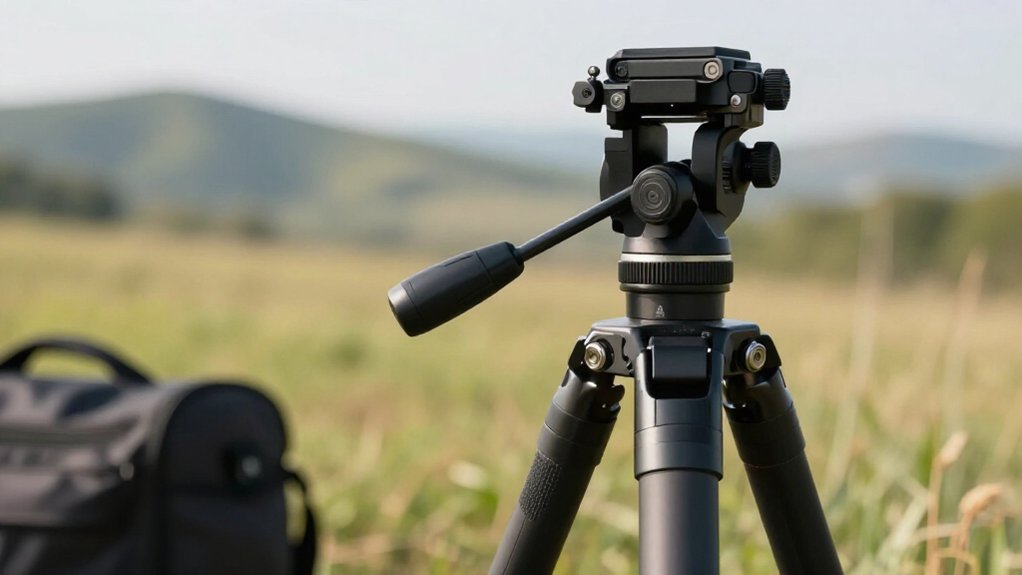
You don’t always need a head for a monopod. Go bare if your lens collar rotates and limited tilt meets your needs; choose a tilt head for controlled, repeatable vertical tracking.
A ball head gives flexible framing adjustments, but you’ll need to lock it before shooting. For lightweight travel gear, that tradeoff may suit you; heavier telephotos work better with a tilt or dedicated monopod head.
Check plate fit and clamp clearance; details below help you choose.
Tilt, Ball, or Bare Monopod
Although a bare monopod can work if you reposition the stick or rotate the lens collar, it gives you little control over tilt and makes aiming up or down less comfortable.
You still need pitch control, since leaning the entire stick forward or backward can feel awkward during extended shooting. A tilt-only head provides repeatable fore-aft movement without requiring you to re-level across multiple axes, so it offers a direct, efficient setup.
A ball head adds flexibility and can suit a lightweight setup, but its loose movement may feel floppy and unpredictable until you lock it. Because you typically tighten it before each shot, adjustments can slow your workflow. Compare these options by how precisely and comfortably you need to control tilt while composing.
Lens and Camera Weight
Head choice also depends on the weight of your camera and lens: the monopod carries most of the load, while the head lets you aim. With a moderate wildlife or travel lens, such as a 100–400mm, a simple, reliable head may be sufficient. A 600mm-class lens can also work on a monopod, but very heavy camera-and-lens combinations put greater demands on the head’s stability and movement.
Ball heads can feel less secure with large primes or telephotos: open, they may flop, while repeated tightening and loosening can slow aiming. Check the load rating, but consider smooth operation too. For very heavy gear, a dedicated monopod head or gimbal may feel more secure; carbon fiber can add stability but can’t compensate for an unsuitable head.
How You Shoot Determines the Setup
Your shooting style determines whether a tilt, ball, or monopod-specific head works best. Choose by workflow. For long lenses, a tilt head lets you point up or down without leaning or crouching to tilt the entire monopod. If you rotate the monopod for most left-right changes, a tilt or dedicated monopod head suits that workflow better.
Lightweight travel setups can use a ball head, but tightening it before each shot adds a step; if released, it may flop.
| Shooting pattern | Practical match |
|---|---|
| Long-lens vertical movement | Tilt head |
| Heavy wildlife support | Monopod gimbal |
For 200–600mm wildlife or birding, a gimbal-style head can feel more secure than a ball head. In sports or birds in flight, frequent small adjustments make the tightening delay important; choose the setup that keeps repositioning controlled and quick.
Ball Head Framing Flexibility
A ball head gives you a wider adjustment range than a tilt-only head, letting you change tilt, roll, and rotation without repositioning the monopod. You can switch between portrait and landscape framing or reframe quickly, even when the monopod sits at an awkward angle.
Each adjustment requires locking the ball before you shoot, which can slow you down and leave the setup unstable while it’s loose.
Angle Adjustment Range
Because a ball head pivots in nearly any direction, it lets you correct both pitch and roll from one locked monopod position, while a tilt head typically adjusts only forward and back. That broader range helps when you can’t set the monopod at an ideal angle, since you can level the frame without repositioning the support.
With a tilt head, you generally adjust pitch alone; you must rotate the monopod to change left-right framing. This makes the head’s correction range more constrained. A ball head’s usable range also depends on setup: position it horizontally for more predictable alignment. If you loosen it on a monopod, the camera may flop, making precise angle control harder than on a more rigidly supported tripod. You gain pitch and roll correction from a single mounting point, but the head needs careful positioning and support to use its full range.
Quick Composition Changes
For quick composition changes, a ball head lets you loosen the clamp, tilt the camera in any direction, and lock the framing without repositioning the monopod.
This flexibility helps when you need an off-axis view but want to keep the monopod vertical: you adjust the camera rather than moving your stance. However, each change requires you to loosen and retighten the clamp, which can slow work, particularly with a large lens.
A tilt head may be quicker when you only need up-and-down movement, since it restricts adjustment to one axis. For rapid framing, compare ball-head adjustment with repositioning a simpler head. Rotating the camera or lens in its collar is often faster for orientation changes. The ball head’s advantage is independent, fine control across multiple axes.
Portrait And Landscape Framing
With a ball head, you can switch between portrait and landscape framing by rotating the camera without tilting the monopod. A ball head’s unrestricted rotation lets you set the camera to either orientation while keeping the support upright.
By comparison, a tilt-only head doesn’t usually provide this rotation; you typically turn the lens in its collar or attach an L-bracket to change orientation. This distinction matters on a monopod because its instability makes whole-body repositioning awkward.
For predictable tilt range and control, mount the ball head horizontally. If you don’t, its movement may feel sloppy until you tighten it. For portrait-landscape changes, choose a model that tightens quickly. A head that needs loosening and tightening for every small adjustment can slow orientation changes.
Reframing Without Repositioning
When you need to reframe without moving the monopod, a ball head lets you quickly adjust the camera’s tilt, roll, or direction while keeping the support planted. A ball-and-socket joint lets you change aim in any direction without shifting the planted support. You can alter tilt, roll, and yaw rapidly, which helps when birds in flight change position and you need quick recomposition.
With a tilt head, you can adjust tilt, but left-or-right framing usually requires rotating the monopod, adding a physical repositioning step. A ball head can reduce how often you hunt for a new position, but it isn’t hands-free: after loosening the control, you must tighten and lock it before shooting. For consistent aiming and locking, keep the ball head horizontal; a tilted setup can make adjustments less predictable and weaken that framing advantage. This tradeoff matters when you value speed over fewer controls.
Wildlife and Sports Use
For wildlife and sports, a tilt or monopod-gimbal head lets you track fast subjects with smooth vertical movement while keeping the monopod mostly upright. Compared with a ball head, it supports heavy telephotos more securely and avoids repeated tightening between shots.
You can reposition quickly by rotating the monopod for lateral changes and tilting the head for elevation.
Fast Subject Tracking
A monopod steadies heavy telephotos for wildlife and sports, extending shooting time beyond what you can manage handholding.
For fast subject tracking, a tilting monopod head lets you follow action vertically without crouching or leaning. You still pan left or right by rotating the monopod in your hands, so the head needn’t provide that movement. Compared with a ball head, a dedicated tilt head offers more controlled, repeatable movement; a loose ball can flop unless you lock it, slowing reacquisition as the subject changes direction.
Many wildlife photographers find monopod results comparable to tripod-and-ball-head setups, yet prefer purpose-built heads for smoother tilt control.
For sports requiring fluid, video-like pans, choose a fluid-style head. Otherwise, prioritize quick, repeatable tilt locking over a high load rating.
Long Lens Support
With a long telephoto, a monopod head helps you track wildlife or sports smoothly while supporting comfortable up-and-down aiming.
For extended sessions, it supports the lens and reduces fatigue and shaky-arm moments. A tilt head usually offers more predictable framing than a ball head: it limits movement to fore-aft tilt, while you turn the monopod for left-right changes. This helps you acquire subjects quickly.
A ball head can suit rapid tracking when you keep the monopod nearly vertical, but loosening it may let the lens flop, disrupting quick repositioning. With a very long lens, such as a 600mm-class prime, you may prefer a monopod gimbal-style head for a more secure feel. Its offset balance may require you to angle the monopod slightly.
Smooth Tilt Movement
When tracking wildlife or sports, a smooth tilt head lets you keep the monopod vertical and make quick up-and-down adjustments without shifting your whole body and stick. A lever- or screw-lock tilt head provides repeatable fore-aft movement as you follow birds or runners.
You control vertical framing with the tilt mechanism and follow action left or right by rotating the monopod. This division of motion suits tracking better than loosening a ball head, which can feel unstable and requires careful locking after each adjustment. That can slow corrections to a wingbeat or a change in a runner’s line.
At low shutter speeds with long lenses, smoother tilt control matters more: fatigue and small shakes can lower your hit rate during fast wildlife and sports sequences.
Quick Repositioning
For fast wildlife and sports sequences, a tilt head usually repositions faster than a ball head: lock the tilt, then rotate the upright monopod to track left or right. You can keep the monopod vertical as you follow lateral movement, which makes quick adjustments easier to control.
The tilt mechanism also lets you aim forward or back without crouching or leaning awkwardly.
A ball head offers flexible framing, but you may need to secure it again for each shot. Loosen it too far, and your camera can flop, slowing the sequence.
Some wildlife shooters find a monopod works about the same with a ball head or gimbal-style support, yet ball-head friction can hinder rapid repositioning. With no head, you must tilt the entire monopod, limiting control at changing angles.
Quick-Release Plate Compatibility
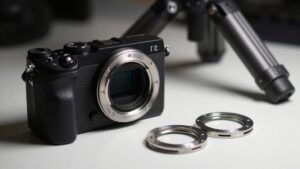
Check the quick-release standard before buying a monopod head: most use an Arca-Swiss dovetail clamp, while the Manfrotto 234RC uses Manfrotto’s standard and won’t accept Arca plates without an adapter. If you already own an Arca plate, choose a compatible head to avoid mismatched hardware and extra adapters in the field.
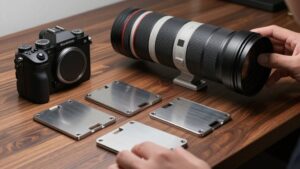
Before selecting a gimbal, confirm that your lens tripod collar or L-bracket places the plate where the head’s geometry can support and align it. Screw-knob clamps generally let you position plates consistently. Lever-release clamps can lock and release faster, but their projecting levers may snag during carry, so many monopod users avoid them.
Compare this trade-off with your handling needs, and verify that your existing plate seats securely before relying on the setup.
Replacement Clamp Parts
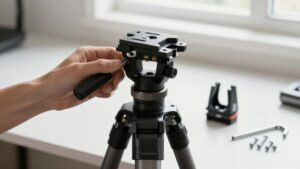
If you replace a monopod head’s clamp, match its plate standard and geometry: most heads use Arca-Swiss, while the Manfrotto 234RC requires a Manfrotto-standard plate. Before buying a top-clamp replacement, compare its dovetail profile and plate thickness with the head’s plate; a close-looking fit may still seat insecurely.
Many heads arrive with a matched clamp and plate, so retain those parts unless the replacement offers a benefit. Screw-knob clamps are common on monopods because they’re less likely than lever releases to catch on backpack straps. However, compare operation, not just clamp style: some designs let you locate and lock a plate with one hand. Preserve that locking behavior and align the release action with the tilt axis as the original design does.
Clamp Knob Clearance During Swaps
Although lever clamps can speed up plate swaps, their projecting handles may snag on backpack straps while you carry or reposition a monopod.
On a monopod, a screw-knob clamp usually trades swap speed for better clearance during shoulder-carry and repositioning. You turn it more slowly than a lever, but reduce snag risk as you move between locations. Compare these details before choosing:
- Check whether you can reach the knob one-handed without changing your grip on the monopod.
- Confirm the clamp accepts your plates; Arca-Swiss-style dovetails are common, while a Manfrotto 234RC may complicate swaps across systems.
- If you swap often, favor a clamp and plate alignment you can locate by touch; some tilt-head designs make this easier during fast adjustments in routine shooting.
Weather-Sealed Head Construction
When shooting in rain or snow, compare how each head protects its moving parts: tilt heads concentrate sealing around a simpler fore-aft axis, while ball heads need protection across the exposed ball joint and socket. Prioritize well-gasketed lever or friction locks and sealed bearing surfaces; water and dust can enter pivot points. Tilt designs have fewer joints, so they’re easier to seal.
- With a ball head, protect the open ball/socket, tightening-knob threads, and drain paths from grit.
- Choose corrosion-resistant stainless or aluminum hardware; exposed clamp threads and plate contacts can fail.
- Lock either head fully to limit play, then wipe and dry Arca-style dovetail and plate interfaces after use.
Ball heads need broader protection and frequent tightening; tilt heads simplify sealing around the axis.
Conclusion
Choose your monopod setup based on your lens, camera weight, and shooting style. A bare monopod keeps the rig light and simple, while a tilt head supports quick vertical movement for wildlife and sports.
A ball head offers broader framing flexibility but may shift under heavy loads. Before buying, check plate compatibility, replacement clamp availability, knob clearance, and weather sealing. If you need fast swaps and secure support, match the head’s capacity and controls to your equipment.