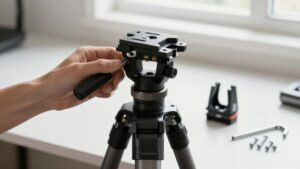
How Does an Arca-Swiss Quick Release Plate Work? The Dovetail Explained
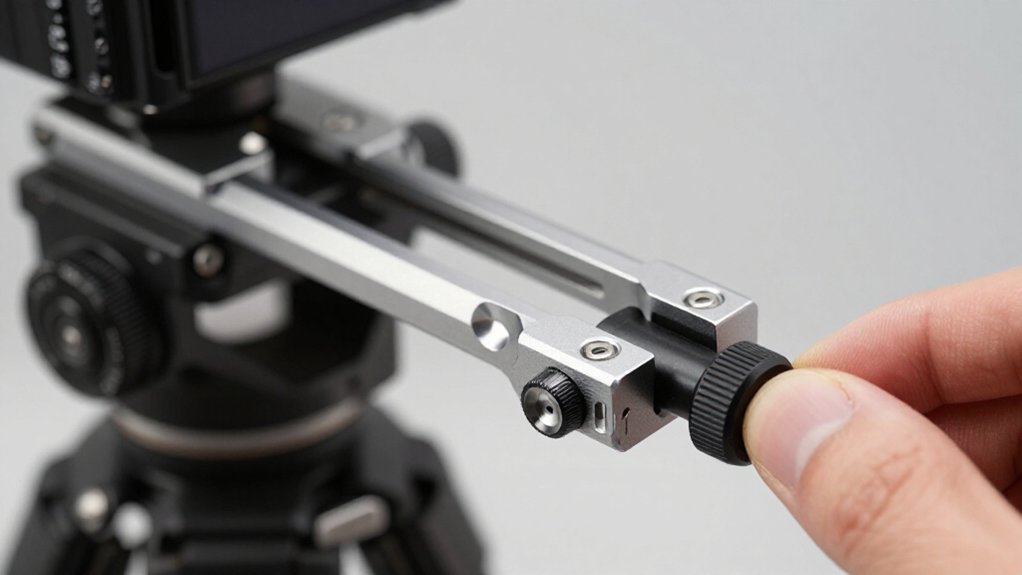
An Arca-Swiss quick-release plate mounts your camera to a tripod head through a 45-degree dovetail.
You slide the plate into the clamp’s channel until it’s fully seated, then tighten a knob or flip a lever so angled jaws grip its matching faces.
Check that the plate won’t shift, and confirm its profile fits the clamp.
You can reposition it for balance after loosening.
The next details explain compatibility, setup, and ways to avoid slippage.
Dovetail Rail-and-Clamp Fit
An Arca-Swiss plate fits its clamp through matching 45° dovetail rails and jaws: with the clamp open, you can drop the plate into place, or slide it into the channel when the clamp is partly open. Once positioned, tighten the clamp’s knob or engage its lever to drive the jaws against the plate’s angled surfaces. This contact holds the plate securely and limits movement between camera and head.
Confirm the rail sits fully in the channel, then close the control until the plate no longer shifts under light hand pressure. To reposition, loosen the control enough to release the jaws, then slide the plate along the channel or lift it out. Support your camera while loosening to prevent an unexpected drop or rotation during handling.
Dovetail Profile Compatibility
Even when the clamp closes firmly, the plate must match its channel’s dovetail profile to seat and slide correctly. Check whether your head accepts the larger Classic Dovetail or smaller MonoballFix profile; their 45° faces aren’t interchangeable without an adapter.
| Profile | Practical check |
|---|---|
| Classic | Larger common standard |
| MonoballFix | Smaller; check channel |
| Dual-size head | Accepts both profiles |
| MonoballFix setup | May need adapter to Classic |
Some modern heads accept both, but a MonoballFix-specific clamp may not. Because third-party “Arca-Swiss style” rails vary, test full engagement before loading your camera. If the plate rocks, stops short, or clamps unevenly, don’t use the setup.
For a smaller MonoballFix plate on a Classic system, use the MonoballFix-to-FlipLock-and-Classic adapter. Confirm the channel profile, not just clamp closure, before each field session outdoors.
Mounting Screw Thread Sizes
For camera-side plates, check the mounting screw as well as the dovetail: most attach with a 1/4-20 screw, the common camera connection specified by ISO 1222:2010.
Some plate designs use a 3/8-inch screw, so don’t assume the socket size from the dovetail profile. The dovetail standard governs how the plate engages the clamp; it doesn’t guarantee that the plate’s screw matches your camera’s threaded socket.
Check your camera or plate documentation, and confirm whether you need 1/4-20 or 3/8 before changing plates between bodies.
For a lens or accessory foot, use the manufacturer-specified thread to secure its dovetail adapter. Confirm the thread before swapping hardware; a compatible dovetail can’t correct a mismatched screw. Check that it engages fully and sits securely in the socket.
Lever vs. Screw Clamps
A lever clamp lets you secure the plate quickly, though you may need two actions to lock it firmly against the safety stops. A screw clamp gives you finer control over jaw pressure, but you set that force by turning the knob.
With either style, check the dovetail standard and confirm the plate is fully seated before shooting.
Lever Clamp Speed
Lever clamps secure an Arca-Swiss plate faster than screw clamps once you know the motion: slide the plate into the dovetail channel, then flip the lever to lock it in one action. That sequence lets you engage or release the camera with one hand, often more quickly than turning a knob through several rotations. After you align the plate’s dovetail with the clamp, drop or slide it into the channel and close the lever.
Some systems use a two-stage action, such as FlipLock, so complete both steps and confirm the clamp is fully secured before you move the camera. The speed benefit depends on familiarity: practice the lever’s direction and travel before working over a tripod or changing gear in the field. Check that the plate profile matches the clamp, including smaller standards such as MonoballFix; a fast lever cannot safely lock an incompatible dovetail. You’ll notice this when you swap plates between bodies, lenses, or heads.
Screw Clamp Precision
Turn a screw-clamp knob to tighten its threaded screw and press the dovetail against the jaws. You can increase pressure gradually, so you control clamping force through fine, continuous adjustment rather than choosing only an open or closed position. That makes a screw clamp useful when you want a repeatable feel as you secure a plate.
It may take longer than a lever clamp, which uses a two-stage toggle to close quickly with less effort. With a lever design such as FlipLock®, you operate the staged mechanism in two actions; its positive engagement can make force application more consistent than a basic knob style. Choose the mechanism that lets you apply and release force deliberately. Check the clamp’s action before moving or balancing a camera.
Compatibility And Security
Clamp security depends on both the locking mechanism and the plate’s fit. Your plate’s 45° dovetail slides into clamp jaws; the lever or screw knob then locks it in place.
A lever clamp, such as FlipLock®, typically closes in two stages and comes factory-set for Arca-Swiss plate fit. A screw-knob Classic clamp uses one tightening action and is simpler. Neither system compensates for an incompatible profile. “Arca-Swiss style” plates can vary in width, so an undersized or oversized dovetail may not seat fully in the channels or safety-pin area.
Some heads accept both Classic and smaller MonoballFix dovetails, but the size may need an adapter. Before mounting, confirm your plate standard matches your clamp—especially FlipLock versus Classic—and push the plate fully home. Seating lets the jaws and safety features resist sliding if the clamp loosens.
Clamp Jaw Tolerance
Clamp jaw clearance should let you slide the plate in smoothly while preventing lateral movement once locked. Consistent contact between the jaws and the plate’s 45° dovetails determines fit; small profile differences can cause looseness or binding.
As you tighten the knob or lever, the jaws must apply secure, even pressure to hold the plate under load.
Jaw Clearance Range
Most Arca-Swiss-style clamps leave only a fraction of a millimeter of jaw clearance: a 45° dovetail plate should slide in when fully loosened, then grip securely as you tighten the knob or lever. Your clamp also depends on plate height and dovetail shape, not width alone; a nominal 35 mm profile may bind or bottom out before the jaws touch. Use these clues:
| Condition | What you notice | Practical check |
|---|---|---|
| Plate too tall/short | Loose grip or extra force | Tighten only as specified |
| Profile mismatch | Binding before jaw contact | Compare dovetail shape |
| Out-of-range | Micro-slide or hard removal | Fully loosen to release |
Confirm safety pins or end stops engage after seating. If you must overtighten or the plate shifts, use a plate within the clamp’s range.
Dovetail Fit Consistency
Beyond jaw clearance, consistent grip depends on how closely the plate’s dovetail matches the clamp’s jaw geometry. Because Arca-Swiss style lacks a formal global specification, third-party plates can differ in profile. Those differences may keep jaws from seating along the contact surfaces, making fit less repeatable.
Check whether your plate uses the larger Classic or smaller MonoballFix dovetail. A size mismatch can feel loose or require extra tightening, even when the plate enters the channel.
FlipLock and Classic clamps may respond differently to marginal tolerances: a profile that barely clears may still lock, but won’t seat as consistently as a compatible one. Some heads provide channels for both sizes, but using the wrong channel can still reduce fit consistency. Match your plate’s dovetail to the intended jaws.
Secure Clamping Pressure
As you tighten an Arca-Swiss style clamp, its jaws press against the plate’s 45° dovetail, using the angled surfaces to create grip.
Its holding force depends on jaw tolerance and how closely the plate’s profile matches. Even slight dimensional differences can reduce contact area and raise slip risk. Because manufacturers don’t use identical dovetail dimensions, plate and jaw fit can vary.
You may need different knob or lever pressure to secure each combination.
After locking the clamp, check that the plate feels fully snug and won’t slide. Don’t assume a tight handle means the jaws contact the profile evenly; confirm the plate stays still. End stops or safety pins can prevent the plate from sliding off the rail, but they can’t prevent micro-slippage caused by poor jaw contact under load.
Ballhead and Tripod Setup
On a tripod, the Arca-Swiss plate connects your camera to the ballhead’s dovetail clamp. Attach the plate to your camera with the standard 1/4-20 screw, then open the clamp and slide the plate’s 45° dovetail into its channel. Once fully seated, tighten the knob or lever until the jaws hold the plate.
For balance, slide the plate forward or backward in the clamp so your camera’s weight sits over ballhead pivot point, then lock it down. This positioning helps keep the setup stable as you pan or tilt. If your head has dual channels, it can accept either the Classic dovetail or the smaller MonoballFix, depending on its design. Heads may include safety pins that catch longer or rail-based setups and help prevent an end-slide.
Camera Screw Loosening Risk
A camera plate can loosen at its 1/4-20 mounting screw if vibration gradually backs it out. Your plate attaches to the camera with one screw, so verify the thread size and engagement before mounting. An undersized screw, cross-threaded start, or light tightening can let walking and activity work it loose.
Seat the plate evenly in the clamp; mismatched Arca-style dovetail profiles can prevent contact and add stress at the screw. Tighten the screw firmly, but don’t force it or damage the threads. After changing lenses or completing a long session, check that it remains secure with a heavy setup.
Inspect the camera base and screw for stripped threads, burrs, or wear from repeated removal; replace damaged parts, since they reduce friction and holding reliability.
Plate Orientation on L-Brackets
After confirming the mounting screw stays tight, check your L-bracket’s orientation before attaching it to the clamp. The dovetail’s 45-degree faces must meet the jaws in the correct direction, so the plate slides in smoothly when you open the clamp.
- Aim the camera-side dovetail toward the jaws’ receiving angle.
- Keep alignment centered when switching between landscape and portrait.
- On locking clamps, point the wider lip toward the locking mechanism.
- Mount the bracket consistently relative to the clamp’s locking side.
- Slide it to the end position, then tighten to engage both jaw sides.
This prevents shifting or partial disengagement under load; confirm the plate sits fully in the clamp before shooting, especially when the camera’s weight changes orientation, while your tripod head stays fixed securely.
Clean Clamp Contact Surfaces
Clean contact surfaces let the Arca-Swiss clamp seat the plate securely. The 45° dovetail must slide fully into the clamp channels before you tighten a knob or engage a lever. Grit, dust, or anodizing debris between the jaw faces and dovetail can stop the plate short. It may feel tight, yet reduced contact means less friction and a less secure lock.
Before mounting, wipe the plate’s dovetail and clamp jaws, especially after outdoor use. Keep their contact faces free of grit and obstructions so the plate reaches the clamp’s fully-in position. Check that it slides smoothly and stops at the same position before you lock it. If it doesn’t, inspect for contamination or wear; don’t assume the problem is the clamp’s weight rating. Clean surfaces help prevent micro-slippage under load.
Conclusion
When you use an Arca-Swiss plate, its angled dovetail slides into a matching clamp, and the clamp’s jaws secure it by friction. Check profile compatibility, jaw fit, and clamp tension before mounting your camera. Choose a lever or screw clamp you can lock reliably, and keep contact surfaces clean.
Tighten the plate’s mounting screw, orient L-brackets to suit your setup, and inspect for loosening during use. A secure fit helps your camera stay stable on the tripod.