Gimbal Head vs Ball Head for Telephoto Lenses: Which Tracks Wildlife Best?
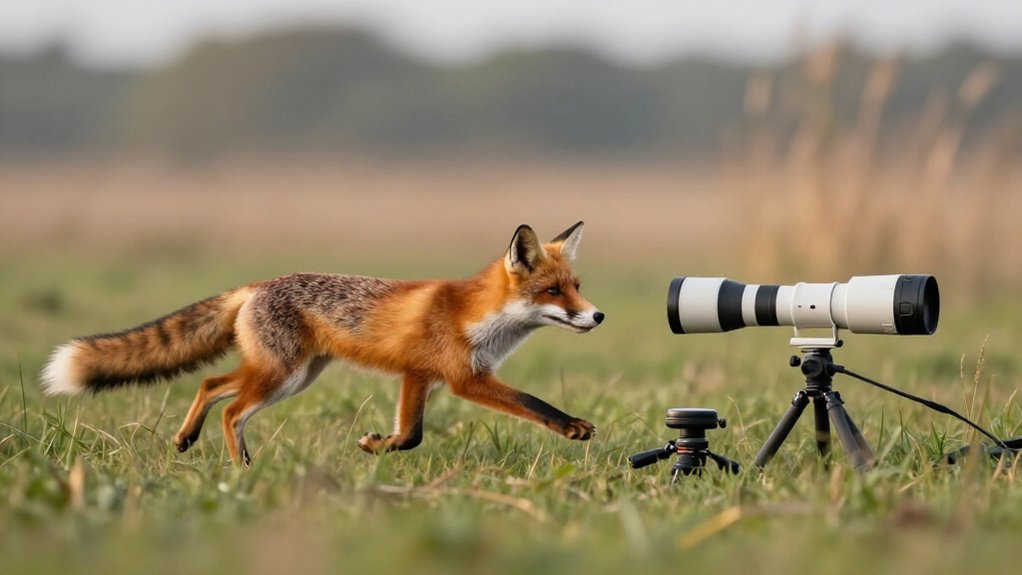
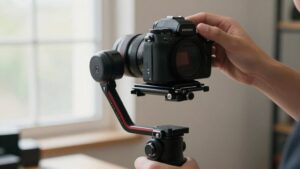
For sustained wildlife tracking with a heavy telephoto, you’ll keep birds in frame more smoothly with a properly balanced gimbal than with a ball head. Separate pan and tilt controls let you follow flight with less strain, while counterbalancing the lens helps small corrections feel precise.
A ball head packs lighter and suits quick reframing, especially for perched birds. Check leveling and collar clearance before shooting; the details ahead can help you choose confidently.
Tracking Speed and Precision
For sustained tracking, a gimbal’s separate pan and tilt axes let you follow a subject smoothly without the whole aiming plane flopping as you loosen a ball head.
| Choice | Field result |
|---|---|
| Gimbal | Separate axes support steady flight tracking. |
| Ball head | Quick reframing, less controlled pursuit. |
| Leveling | Check horizon before tracking. |
When you follow birds in flight, you can pan and tilt independently without fighting a loose, shifting aiming plane. Balance around the rig’s center of gravity helps it move and stay on target, so tracking feels faster and more precise than with a single-lock ball head. A ball head suits quick reframing; choose it when you need to redirect the lens, not maintain a controlled sweep.
Level the gimbal before a session. A tilted setup can throw off your horizon and leave you rejecting frames or correcting in post. Once level, keep movements measured, follow the subject’s path, and judge steadiness.
Counterbalancing Heavy Telephoto Lenses
With a heavy telephoto lens, a gimbal’s separate pan and tilt axes let you balance the setup near its center of gravity, so you can track without constantly holding the camera up.
Set the lens plate so the rig stays level when you release your grip. Move it fore or aft in small increments, then test tilt across its working range. A balanced setup moves with light pressure, easing fatigue and helping you keep wildlife framed through a long session.
Check the base and horizon before tracking; poor balance or leveling can add unwanted tilt and make movement less reliable, costing time in post-processing. For very heavy lenses, a gimbal generally manages continuous tracking more smoothly than a ball head under sustained wildlife tracking.
Burst-Rate Keeper Yield
A balanced gimbal can raise your burst-rate keeper yield on birds in flight by letting you re-aim a heavy telephoto smoothly and hold the subject in frame with less strain. That steadier movement helps you keep focus moments through a burst that might be lost when a ball head makes smooth panning difficult. With less fatigue, you can maintain framing and lens angle across a long session, improving your odds as action continues.
A ball head may reposition faster for brief reacquisition and often sets up in less time, which can favor short, reactive bursts. But that speed doesn’t guarantee fluid tracking. Before sustained shooting, level your gimbal; an off-level rig can tilt horizons or leave framing out of square, turning technically sharp frames into rejects. Compare keepers across the whole sequence, not just the first few frames. Give each setup a trial in the same light, with similar subjects and burst length.
Hand Placement and Grip
On a gimbal, keep your dominant hand on the pan control and your other on the grip or tilt axis; guide the lens near its center of gravity, often beneath the barrel, so small inputs track birds smoothly without fighting torque.
With a ball head, use a consistent catch-and-re-lock grip: loosen with one hand just enough to aim, then tighten while your other hand supports the camera. This prevents a side-to-side flop from spoiling your framing.
Keep support steady as you loosen; tighten gradually while watching the frame for unwanted tilt. On an Arca-type clamp plate, repeat your hand placement to avoid twisting the mount. Between landscapes and wildlife, keep thumbs familiar: ball heads reposition quickly, while gimbals reward two-handed guidance.
Lens Collar Rotation Clearance
Test the lens collar’s rotation before relying on the setup in the field. With a long telephoto, check whether the collar turns around the lens axis without the camera striking the head body, leveling base, or clamp. A ball head’s extra movement axes can create awkward paths; at steep angles, the lens may swing into the head or snag.
For birds-in-flight tracking, you’ll pan and tilt widely, then rotate the collar between horizontal and vertical positions. Some hybrid long-lens heads limit unnecessary rotation near the mount, reducing collision risks.
Mount your complete rig, loosen the controls for full pan and tilt, and turn the collar through its range during the test. Check forward, backward, and side-to-side extremes, confirming nothing touches before you track wildlife.
Arca-Swiss Plate Compatibility
Because most gimbal and ball heads accept Arca-style plates, you can often use the same plate on both.
Fit an Arca dovetail plate beneath your camera or on the lens foot; its rails slide into the clamp for quick positioning with little play. Check that the clamp closes fully and the plate sits squarely.
With a long lens on a rotating collar, keep plate alignment consistent as you turn it; otherwise, it may not seat cleanly, affecting tracking or leveling. You can mount compatible gimbal attachments, including the GKJr Katana Pro or Tomahawk, to Arca-type systems, making transfers between setups practical in the field, often.
Standardize on one Arca-compatible plate system, such as RRS, across your tripod and heads. Then choose by motion control: gimbal balance for tracking, or a ball head’s fast, one-knob repositioning.
Wind-Induced Camera Shake
Even with the same Arca-compatible plate, wind can expose a difference between head types: a gimbal’s separate pan and tilt axes usually track more smoothly, while a loosened ball head can shift or flop slightly and turn a gust into blur. With a long super-telephoto, its mass makes each wind impulse harder to damp, even on a capable head. Review frames between gusts, especially when your shutter speeds fall.
- Balance the lens carefully; counterbalance helps a gimbal follow wildlife without sudden dips.
- On a ball head, tighten enough to remove play; looseness invites side-to-side shifts.
- Set tripod legs firmly, then check level; poor leveling can compound micro-movement into horizon tilt.
- For long exposures, secure every control: wind can still cause drift and costly blur.
Packability and Travel Weight
When you’re packing for a trip, a ball head usually takes up less space and weighs less; the NEEWER GM36, for example, weighs just 310 g (10.9 oz). A full gimbal is bulkier and heavier, and you may need to pack a leveling base and allow extra setup time.
If you need gimbal-style tracking, lightweight or hybrid models can reduce that travel burden.
Packed Size and Bulk
For travel, a ball head usually takes less space and weight: its single ball-and-socket joint and quick locking knob make it easy to pack and carry all day. For a packed bag, judge the head by its folded profile, not only its label.
A gimbal’s long arms and open cradle can snag dividers, press against clothing, or demand a dedicated compartment. Check these points before you leave:
- Measure the folded head against your bag’s smallest compartment.
- Check whether arms or knobs catch dividers and straps.
- A compact ball head, like the NEEWER GM36, packs into tight gaps.
- Choose a hybrid when you want fewer protruding axes.
Travel-focused FlexShooter Pro can also save room, though it won’t feel as fluid as a true gimbal head.
Weight for Travel
Beyond how a head fits in your bag, its weight matters over a full day of travel.
Ball heads are generally lighter and compact, so you can carry one comfortably from trailhead to blind without noticing every ounce. A compact travel model such as the NEEWER GM36, at about 310g (10.9oz), offers a useful reference.
Gimbal heads often weigh more because they house balancing and smooth-motion mechanisms; their bulk adds up. Yet if you’re tracking wildlife with a heavy long lens, a gimbal can make movement less fatiguing and steadier. You should weigh that benefit against setup and travel mass. Hybrid designs, including some Acratech options, seek to retain ball-head convenience while adding gimbal-style function. For travel, choose the lightest setup that supports your lens and tracking needs.
Perched-Bird Compositions
When a bird settles on a perch, you can usually frame it with a ball head’s quick aim-and-lock control. Watch for side-to-side flop if you loosen a rotating collar, and make small adjustments before tightening the head.
With a heavy telephoto, a balanced gimbal can make those precise shifts steadier and less tiring.
Stable Framing
A perched bird gives you time to frame carefully, and a ball head often makes that easy: one main knob lets you make a compact angle adjustment and lock the camera in place. With a heavy telephoto, such as a Nikon 200,500mm f/5.6-class lens, you don’t need a gimbal for a stationary bird, though it can ease fatigue during a long wait.
- Lock the composition before you release the main knob; a ball head can shift tilt when you reopen it.
- Keep your framing settled with minimal re-unlocking, especially at long focal lengths.
- Balance a gimbal around the rig’s center of gravity and level it; otherwise, horizon errors may persist in the frame.
- Choose a hybrid head for quick refinement plus steady gimbal-style support.
Precise Head Adjustments
For a perched bird, precise framing comes from small, repeatable adjustments rather than repeated loosening and locking.
With a gimbal, keep the camera-lens center of gravity over the head so it stays put as you refine the angle with light pressure. Use pan and tilt controls; geared movements help you make tiny corrections without overshooting.
With a ball head, aim first, then make a micro-set and clamp. Loosen only enough to move, and tighten consistently; locking can add unwanted tilt. A rotating collar may let the lens flop sideways when you release tension, so keep your adjustment small.
Before the final lock, position tripod legs to resist drift. Re-level a gimbal-style setup at its leveling base; a tilted horizon forces correction and costs keepers.
Balancing Long Lenses
Once your framing is close, balance matters as much as fine adjustment: with a long telephoto, a gimbal lets you place the camera-lens center of gravity over the head, so small changes in a perched bird’s position take less effort and the rig feels steadier. Before settling in, level your tripod base; an uneven platform can tilt the horizon and cost you frames.
With a heavy zoom, such as a 200 to 500mm lens, balancing also eases fatigue, even when the bird stays still. Check these:
- Set collar for free pivot.
- Loosen controls gradually; check for drift.
- Level the gimbal before tracking.
- Recheck balance after adding accessories.
A ball head works fast, but loosen its lock carefully to limit unwanted micro-tilt and side-to-side flop.
Tripod Head Maintenance Tips
After each shoot, loosen the head and wipe away sand, dust, and grit, especially around locks and bearings, before debris can grind into moving parts. Check the main locking knob and secondary panning lock on a ball head; both should clamp without slipping, or framing may drift during a long exposure.
After transit, move a gimbal’s counterbalance and tension controls; they should feel smooth. Re-level with a leveling base when needed to keep horizons straight.
Periodically inspect and snug fasteners, Arca-style clamps, quick-release plates, and safety-stop screws. Under heavy telephoto loads, a 15 kg/33 lb rating won’t help if a plate lets your lens shift.
Don’t over-tighten locks. Store the head dry and protected; moisture and corrosion in the socket or hinge points can spoil tracking over time.
Conclusion
Choose a gimbal when you’re tracking fast wildlife with a heavy telephoto, especially birds in flight. A ball head suits you better when you value compact packing and quick repositioning for perched subjects. Before you commit, test counterbalance, collar clearance, grip, and burst keepers with your own lens.
In wind, tighten your setup and use sound shutter technique. Keep the head clean, checked, and ready. Then trust the setup that lets you keep subjects framed.