Do Carbon Fiber Tripods Really Dampen Vibration Better Than Aluminum?
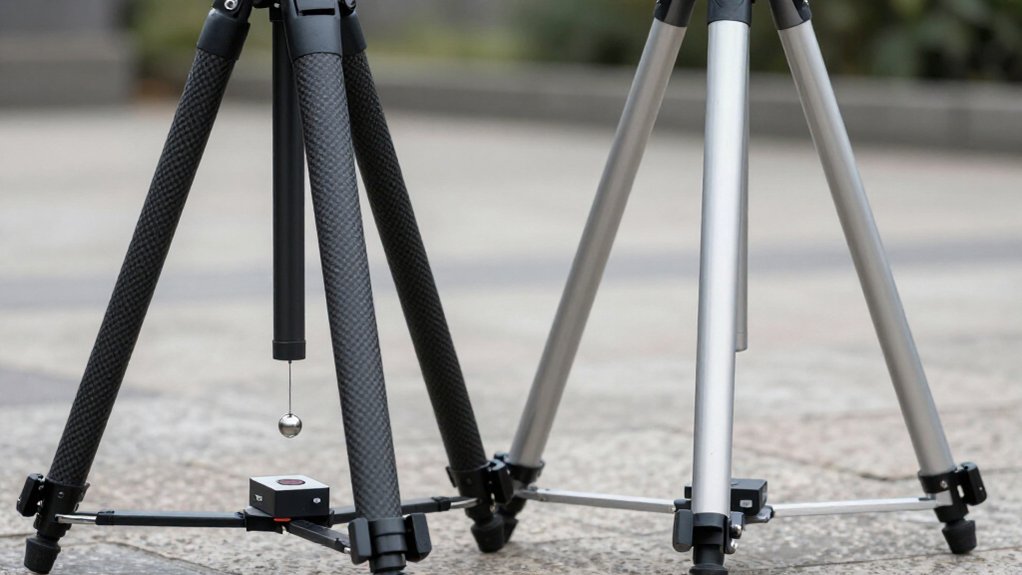
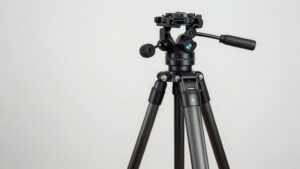
Carbon-fiber tripods generally damp leg vibrations faster than comparable aluminum models, so you may get shorter settling times after bumps or wind and sharper long exposures. But material alone doesn’t determine stability: tube diameter, wall thickness, joints, leg sections, head, and camera load can outweigh the difference.
Aluminum’s added mass may help resist gusts, while neither material prevents wind-driven motion. Your setup and conditions matter in practice; the details below explain when each advantage counts.
Carbon Fiber Vibration Damping
Carbon fiber can damp vibrations more effectively than aluminum, absorbing and dissipating motion that might otherwise reach your camera during a long exposure. When you bump a leg or wind loads the tubes, the composite can shorten settling time by reducing oscillation. Aluminum generally transmits more vibration through its structure, so movement may persist longer after a disturbance.
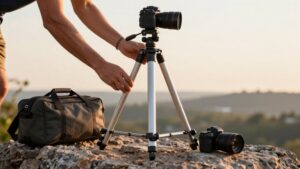
You’ll notice the difference where inputs affect a setup, such as near traffic or on exposed mountain terrain. The NEEWER LiteTrip LT38 illustrates the tradeoff: its carbon-fiber build weighs 2.4 pounds and carries a 22-pound rating, making it portable for hikes. However, damping isn’t the same as stability. If your tripod is light or narrow, wind can tip it or keep it oscillating, whatever its material.
Sharper Long-Exposure Images
For long exposures, carbon fiber’s stronger vibration damping can help keep fine details sharp by shortening the time camera movement takes to settle. When you shoot in wind or near rumbling equipment, that faster settling can reduce oscillations that would otherwise soften edges during the exposure.
Aluminum transmits more vibration, so your camera may take longer to reach micro-level stability, especially with a large lens or in gusty conditions. Because every ongoing movement adds blur, the difference can matter even when you use the same camera and lens. A lightweight carbon-fiber tripod can still provide a steady hold if its construction resists flex.
For example, the NEEWER LiteTrip LT38 weighs about 2.4 pounds and supports a 22-pound load. Compare settling behavior and rigidity, not material alone, when choosing a tripod for crisp long exposures.
Vibration on Wooden Bridges
On a wooden bridge, each footstep can set the surface and tripod legs oscillating. Carbon fiber typically damps those leg-induced vibrations more effectively than aluminum, so your setup may settle sooner after the bridge moves. That difference can matter during long exposures, when residual movement softens detail. Aluminum transmits more vibration under the same load, and a flexing span may make shake more visible.
Still, neither material is immune to bridge motion. Wind or foot traffic can overwhelm damping benefits. Your tripod, head, and camera need adequate stiffness and mass; an undersized system or insufficient load capacity can amplify wobble even with carbon legs. To compare materials, test exposure sharpness or settling time at the same location and settings. Footing and setup tightness also influence results.
Tube Diameter and Wall Thickness
When you compare tripod legs, a larger tube diameter can increase stiffness without adding as much weight as thicker walls.
Carbon-fiber layups let manufacturers tune wall thickness and fiber orientation to limit vibration, while aluminum tubes rely more on added material and mass. You’ll find that similar dimensions can still produce different vibration behavior because material and geometry affect stiffness per unit weight.
Diameter and Stiffness
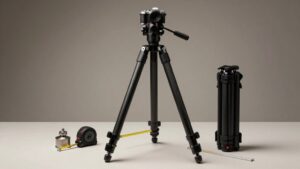
Tube diameter and wall thickness strongly affect tripod stiffness and vibration, often more than the choice between carbon fiber and aluminum.
When you compare legs, consider diameter alongside material. A larger tube resists bending because its second moment of area rises with geometry. That stiffness can limit flex and reduce oscillation, regardless of whether the leg uses carbon fiber or aluminum.
Carbon composites can deliver high stiffness at lower mass, but tube dimensions still govern how much a leg bends under load. You shouldn’t assume carbon vibrates less: a thick aluminum tube may outperform a slimmer carbon tube. For comparison, match tube diameter and leg-section count. Lightweight, small-diameter designs may flex more, while composite layups can help control ringing when paired with tube stiffness.
Wall Thickness Effects
Wall thickness affects tripod-leg flex: for a given outer diameter, a thicker tube generally increases stiffness and can reduce vibration reaching the camera. You’ll notice this most under load: less flex can mean less movement at your camera.
Yet added material also adds mass, so thickness alone doesn’t predict performance. A wider tube with an efficient wall can provide greater bending stiffness at similar mass than a narrower, thicker-walled tube.
Carbon fiber legs often use thin composite walls and tailored layups to achieve high stiffness at low weight; aluminum legs are usually heavier at matching dimensions. A thicker aluminum leg may still resist low-frequency motion better if dimensions differ. To compare damping fairly, match tube diameter, wall thickness, and mass before crediting either material.
Tube Geometry and Vibration
Because tube geometry governs bending stiffness, a modest increase in diameter or wall thickness can matter more than whether a leg is carbon fiber or aluminum.
You should compare outer and inner diameters, wall profiles, and section joints, because these dimensions shape the tube’s second moment of area and strongly affect resistance to bending. A slightly wider or thicker tube may outperform a superior material choice.
Carbon-fiber designs often use thin walls and chosen diameters to keep mass low while maintaining stiffness; this can shift resonances and help vibrations settle quickly. Aluminum extrusions have thicker, more conductive walls and can transmit vibration more readily unless designers tune diameter and thickness. So you can’t infer damping from material alone; dimensions and build quality matter.
Temperature Effects on Damping
In cold weather, carbon fiber’s low thermal conductivity feels less icy than aluminum, helping you grip and adjust your tripod with fewer movements that can shake an exposure. Aluminum transfers heat faster, so it can warm or cool more quickly during temperature shifts, potentially changing how stiff its legs feel compared with carbon fiber.
Temperature affects damping mainly through handling steadiness and perceived stiffness; neither material eliminates vibration across all conditions.
Cold-Weather Damping
Cold temperatures affect both tripod materials, but carbon fiber generally preserves its damping advantage over aluminum. In freezing conditions, aluminum becomes more rigid, yet it can pass wind- or touch-induced micro-tremors more readily. Carbon fiber’s composite layup and fiber/resin structure typically damp those oscillations and shift resonance less as temperatures fall, supporting more consistent long-exposure settling.
| Factor | Carbon fiber | Aluminum |
|---|---|---|
| Cold contact | Feels less icy | Feels colder |
| System response | Usually settles sooner | May transmit tremors |
You’ll notice that your head, legs, and camera mass still determine overall behavior; in extreme cold, stiff legs alone don’t guarantee stability. Carbon fiber’s lower thermal conductivity can also make adjustments easier, reducing handling disturbances. For cold, coastal work, it’s generally the steadier choice for your setup.
Heat and Material Response
Temperature affects tripod handling and stability more predictably than it affects damping directly. Carbon fiber conducts heat less readily than aluminum, so its legs usually feel less cold in winter and less heat-soaked in warmth. This can make your grip and adjustments more consistent, but doesn’t establish superior damping.
Carbon fiber’s damping comes largely from resin and fiber layup. Temperature may alter the resin’s viscoelastic response slightly, yet the direction and size depend on formulation; you can’t assume the same result across models.
Aluminum tracks ambient temperature faster. Rapid warming or cooling can increase expansion and contraction at joints, potentially affecting stability. In severe cold, both materials may feel stiffer, while hardware and grease also matter.
If you shoot in temperature extremes, prioritize tripod-head build.
Temperature-Driven Vibration Changes
Expect temperature to change vibration damping only modestly, with effects varying by tripod design and material formulation.
Carbon fiber’s epoxy/resin composite typically conducts heat less readily than aluminum, so its legs feel less cold and undergo smaller temperature-driven dimensional changes. Aluminum expands and contracts more, which can shift joint tension, leg fit, and stiffness, affecting how quickly you regain stability after a disturbance.
Yet neither material’s damping stays constant: temperature can alter its elastic modulus, so cold or heat may improve or worsen settling. In severe cold, aluminum may feel brittle and transmit vibration more readily, while carbon composites may feel steadier. Still, leg diameter, wall thickness, head mass, and locks usually matter more than temperature. You’ll notice thermal effects most during long exposures there.
Astrophotography in Gusty Conditions
During gusty astrophotography sessions, carbon fiber can damp high-frequency vibration from tripod resonance, but it cannot prevent wind-driven wobble or poor anchoring. Aluminum’s greater mass can add static inertia, so at the same leg diameter it may resist gust-induced tipping better than a lighter carbon-fiber model. Even small oscillations can blur stars during exposures lasting tens of seconds or longer.
You’ll get reliable results by spreading the legs, lowering the center of gravity, and avoiding an extended center column. Hang a weighted bag, keep the head and rig tight, and anchor firmly; these steps often matter far more than damping specifications in gusts. Carbon fiber resists corrosion and feels less conductive in cold, damp, or coastal conditions, but gusts dominate image quality once your tripod’s excited.
Clamp-Induced Tube Damage
Although both tripod materials can be damaged by overtightening, carbon-fiber tubes are more vulnerable to cracking from concentrated clamp pressure. The clamp can impose a point load, triggering microcracks or delamination even when your leg functions. Aluminum alloys 6061 and 7075 deform more ductilely; excessive pressure usually leaves a dent or lasting shape change rather than sudden structural cracking.
That damage may leave the leg serviceable, while carbon damage can remain hidden and prove difficult or impractical to repair. Third-party clamps and careless accessories raise the risk, as does tightening beyond the manufacturer’s specification. Tighten each clamp only enough to prevent leg slip; don’t treat maximum force as added security. A cracked tube can compromise safety and the damping performance you chose carbon to gain.
Misreading Vibration Tests
A bench tap test doesn’t necessarily show how a tripod will perform with a camera, lens, and head attached. Bench videos often record the tripod ringing after a handheld tap, not the loaded camera system’s oscillation. So you’re comparing a limited proxy, not a shooting result.
- Carbon fiber may settle faster than aluminum, but leg diameter, joints, and head resonance can dominate.
- Different heights, extension levels, or clamp pressure can change stiffness, confounding damping comparisons.
- Peak-to-peak motion alone can mislead; time-to-settle better indicates whether vibration decays sooner.
- Wind, cable tug, and lens zoom or stabilization can move your camera, yet a bench tap omits these sources.
Carbon fiber may reduce vibration, not eliminate it. Match loads and measure amplitude plus settling time; field conditions differ.
Use Electronic First-Curtain Shutter
When your camera supports it, electronic first-curtain shutter (EFCS) can reduce the mechanical shock at exposure start, often improving sharpness whether your tripod uses aluminum or carbon-fiber legs. EFCS starts exposure electronically but retains the mechanical rear curtain, reducing the initial impulse that often causes micro-blur. Because this shock can dominate at shorter exposure times, EFCS may improve results more than changing leg material.
Carbon fiber can still limit vibration from wind or ground tremor, while aluminum may transmit more of those disturbances; the methods address different sources.
When comparing tripod damping, keep shutter mode constant. Otherwise, enabling EFCS lowers blur and can make carbon fiber appear less effective than it is. Use EFCS only if your camera implements it reliably, and check the manual for operating limits. Don’t assume an electronic shutter is equivalent: depending on the sensor, it can introduce artifacts. Treat EFCS as a complement to tripod damping, not a substitute.
Conclusion
Carbon fiber generally damps vibration better than aluminum, but the difference depends on tube diameter, wall thickness, temperature, and leg design.
You’ll get sharper long-exposure images only if the tripod also resists wind, bridge movement, and clamp damage. Don’t rely on material labels or simplistic vibration tests: compare complete setups under realistic conditions. In gusts, reduce exposed area and secure your gear. For additional vibration control, use electronic first-curtain shutter and avoid touching the camera during exposure.